What This Article Covers
This article talks about the visibility issues when driving at night and explains how to spot pedestrians earlier when driving at night, improve visual scanning, use headlights correctly, adjust speed to visibility, and develop safer night-driving habits.
Why Pedestrians Are Harder to See at Night
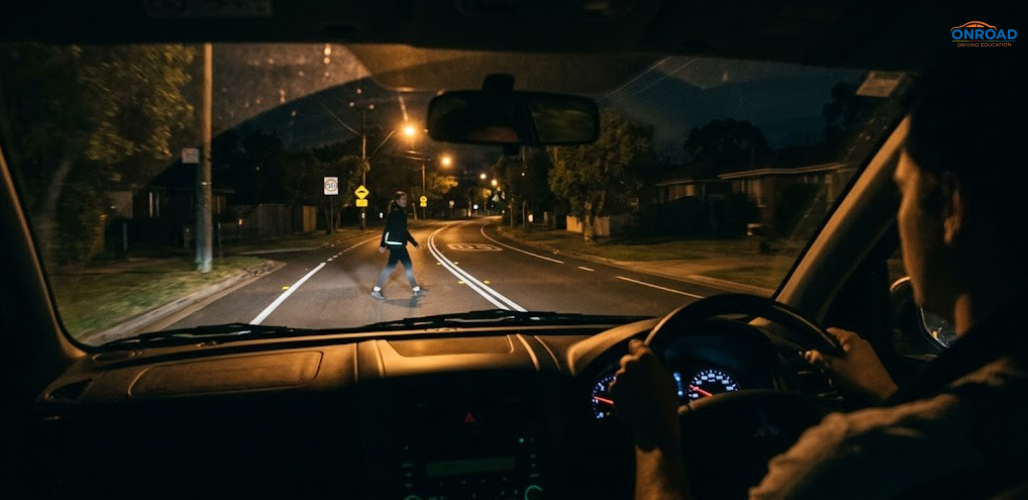
You’re driving home after dark when someone steps out from between two parked cars. During the day, you might have spotted them sooner, but at night, they can be difficult to see until you’re much closer. Situations like this are why night driving requires more than simply switching on your headlights. If you’re learning to drive, a driving school can help you develop the awareness needed to recognise hazards earlier. With the right habits, you can give yourself more time to respond when pedestrians appear unexpectedly.
Look Beyond the Road Directly Ahead
One common mistake is focusing only on the vehicle in front or the centre of your lane. At night, you also need to pay attention to footpaths, road edges, driveways and gaps between parked cars. For example, if you’re approaching a bus stop, look for people who may be preparing to cross the road. Near shopping areas, watch for pedestrians moving between parked vehicles. Looking for signs of movement before someone enters your path can help you anticipate potential hazards. This is also an important part of recognising developing hazards, a skill that can help you make safer decisions in many driving situations.
Adjust Your Speed Before a Hazard Appears
Your headlights only illuminate a limited area ahead, so travelling too quickly can leave you with little time to react when someone appears in the road. The posted speed limit may not be a safe speed if visibility is poor or pedestrian activity is high. Ease off the accelerator when approaching intersections, pedestrian crossings, bus stops and poorly lit streets. Leave enough space to slow down or stop safely if someone steps onto the road. If you cannot see clearly enough to respond to a hazard, reduce your speed further. Maintaining space around your vehicle also matters. Practise maintaining a safe following distance so you have room to respond without being pressured by the traffic behind you.
Use Your Headlights Properly
Headlights help you see the road and make your vehicle more visible to others. In NSW, headlights must be on between sunset and sunrise, and whenever there is insufficient daylight to see a person wearing dark clothing from 100 metres away. High beams can help on dark roads without nearby traffic, but you must dip them when required, including when approaching oncoming vehicles or following another vehicle within 200 metres. Avoid looking directly at oncoming headlights, as glare can temporarily affect your vision. Remember that headlights improve visibility, but they cannot guarantee that you will see every pedestrian in time.
Watch for Pedestrians in Unexpected Places
Not every pedestrian will cross at a marked crossing. Someone might emerge from behind a parked car, walk near the edge of an unlit road, or step out while crossing near a bus stop. Children can also move unpredictably, while older pedestrians may need more time to cross. When approaching places where people are likely to be walking, ease off the accelerator and prepare to stop if necessary. Never assume a pedestrian has seen your vehicle or will wait for you to pass. If there is a risk of colliding with someone, you must take appropriate action to avoid the collision. Night driving requires extra care on unfamiliar roads, too, particularly when visibility is limited, and hazards can appear unexpectedly. Learning from a professional instructor in a Sydney driving school can help you learn how to avoid unexpected hazards on regional Australian roads at night.
Practise Night Driving With the Right Guidance
Night driving becomes easier to manage as you gain experience, but practice should be gradual and supervised while you’re learning. A professional driving lesson can help you improve your visual scanning, speed management and hazard awareness in real traffic. A Sydney Driving School can also help you practise on different roads and in varying lighting conditions. A professional instructor would also know the right time when learners should start practising night driving. If you're eligible, the Safer Drivers Course can further develop skills such as hazard awareness and speed management, although it is not a dedicated night-driving course.
Build Better Night Driving Habits
Spotting pedestrians earlier isn't about having perfect eyesight or reacting at the last second. It comes from looking beyond your immediate path, anticipating where people might appear and adjusting your speed to suit the conditions.
Want to feel more confident driving after dark? Book a driving lesson with Onroad Driving School and practise the skills that help you recognise hazards earlier and make safer decisions. If you’re looking for a Driving School Sydney learners can turn to for practical guidance, we’re ready to help you build confidence one lesson at a time.
Frequently Asked Questions
Q1. Why is it harder to see pedestrians when driving at night?
A: Poor lighting, dark clothing, headlight glare, and limited visibility can make pedestrians harder to distinguish from their surroundings.
Q2. How can I spot pedestrians earlier when driving at night?
A: Scan the footpaths and road edges, look for movement near parked cars and crossings, and reduce your speed when visibility is limited.
Q3. Should I drive slower at night in NSW?
A: You should always choose a speed that is safe for the conditions. Poor lighting, rain and pedestrian activity may mean travelling below the posted speed limit is appropriate.
Q4. Can I use high-beam headlights when driving at night?
A: Yes, where appropriate on dark roads, but you must dip your high beams when required, including when approaching oncoming traffic or following another vehicle within 200 metres.
Q5. Can a driving lesson help me improve night driving skills?
A: Yes. A driving lesson can help you practise visual scanning, hazard recognition and speed management under an instructor's guidance.
Q6. Does the Safer Drivers Course teach night driving?
A: The Safer Drivers course is not specifically a night-driving program. However, it covers skills such as hazard awareness, speed management, and safe following distances that are also helpful in night driving. Learners must have completed some night driving as part of their logbook hours to be eligible.