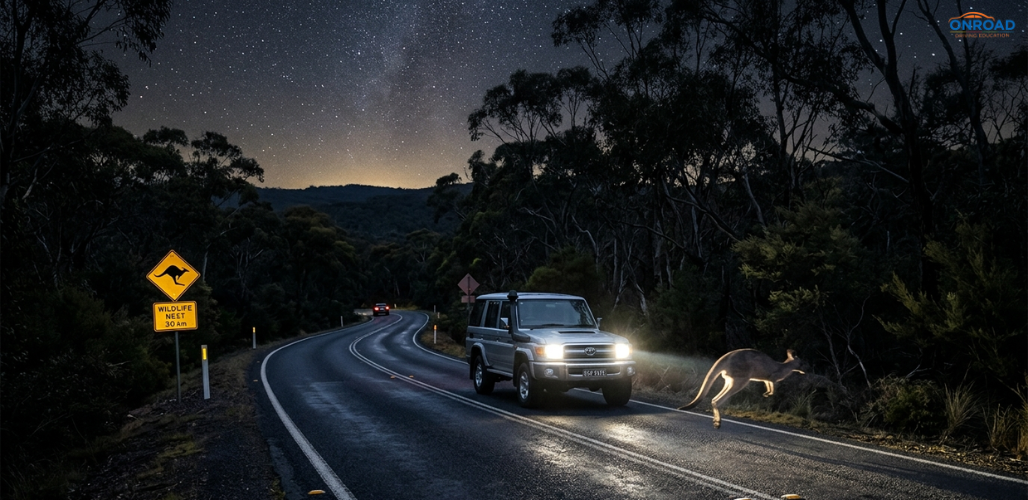
Driving across Australia’s vast regional networks is one of the most iconic experiences you can have behind the wheel. From long stretches of highway connecting coastal towns to winding roads through dense bushland, regional driving offers a sense of freedom that city commuting simply cannot match. However, navigating these roads after dark brings a completely unique set of challenges that every learner and experienced driver must master.
A stark reminder of these dangers occurred recently on the South Coast Highway in Western Australia, where a 19-year-old P-plater collided with a herd of cattle late at night. The driver was momentarily blinded by the high beams of an oncoming vehicle, leaving him with virtually no reaction time when a herd of roughly 50 cows appeared around a bend. While the driver miraculously escaped serious physical injury, his vehicle was destroyed, and several cattle were killed.
Events like this highlight just how quickly a routine night drive on a regional corridor can turn into a critical situation. At Onroad Driving Education, we emphasize that developing strong hazard perception skills early on is key to staying safe on rural and urban roads alike.
The Hidden Dangers of Regional Night Driving
Driving at night inherently reduces your visibility, contrast perception, and peripheral vision. On unlit rural highways, these factors are amplified significantly. Understanding what you are up against is the first step toward staying safe.
1. Unexpected Livestock and Wildlife
Unlike urban environments, regional roads often cut directly through agricultural property or natural wildlife habitats.
-
Livestock: Fences on rural properties can break or be damaged by falling branches, allowing cattle, sheep, or horses to wander onto the tarmac. Because of their size, colliding with livestock can cause catastrophic vehicle damage and severe injury.
-
Native Wildlife: Kangaroos, wallabies, wombats, and emus are predominantly active during dawn, dusk, and nighttime (crepuscular and nocturnal behavior). Kangaroos, in particular, are unpredictable and can suddenly bound across the road toward your headlights.
2. High-Beam Glare and Temporary Blindness
High beams are an essential tool for rural driving, but misuse or poor timing can temporarily blind oncoming motorists.
When a driver is exposed to intense light in pitch-black conditions, their pupils rapidly constrict. Once the light source passes, it takes several seconds for the eyes to readjust to the darkness. At 100 km/h, a car travels roughly 28 metres every single second—meaning a few seconds of temporary blindness leaves you driving blind for nearly 100 metres.
3. Limited Road Infrastructure
Regional roads often lack street lighting, wide shoulders, or physical barriers separating lanes. Furthermore, road surfaces in remote areas can feature loose gravel, potholes, or sudden cambers that require full concentration and instant reaction time.
Essential Night Driving Safety Tips
Whether you are learning to drive through a professional driving school or have been behind the wheel for decades, practicing proactive defensive driving at night can save your life.
High-Beam Etiquette and Management
Using your high beams correctly ensures you illuminate as much of the road as possible without compromising the safety of other road users.
-
Dip Your Lights Early: In Australia, road rules dictate that you must dip your headlights to low beam when an oncoming vehicle is within 200 metres, or when you are driving within 200 metres behind another vehicle.
-
Avoid Glare Blindness: If an oncoming vehicle fails to dip their high beams, do not glare directly into their lights. Instead, look slightly down toward the left-hand edge of your lane or the fog line (white road marking). This keeps your vehicle in lane while preserving your night vision.
-
Use High Beams Wisely on Bends: Switch to low beam before entering a sharp curve or crest if you suspect another vehicle might be approaching from the opposite direction.
Building Confidence with Professional Driver Training
Navigating complex road scenarios—like night driving, high-speed regional travel, and sudden hazard management—requires structured preparation. Enrolling in a top-rated Sydney driving school gives learner drivers the practical experience needed to handle unpredictable road conditions calmly and correctly.
For learner drivers in NSW looking to fast-track their skills and safety awareness, participating in an official Safer Drivers Course is one of the most effective steps you can take. This course focuses specifically on:
-
Managing Speed and Space Margins: Learning how to maintain safe gap distances, especially in low-visibility nighttime conditions.
-
Hazard Perception: Training your brain to anticipate potential dangers—such as stock on the road or erratic oncoming traffic—long before they become emergencies.
-
Reducing Risk-Taking Behavior: Understanding how external factors like fatigue, peer pressure, and nighttime glare impact decision-making.
By pairing quality lessons from a accredited driving school with structured safety programs, learners build lifelong defensive driving habits.
How to React to Animals on the Road
Encountering an animal on the road requires split-second decision-making. Knowing how to respond beforehand reduces panic.
|
Situation
|
Recommended Action
|
What to Avoid
|
|
Animal on the road ahead
|
Brake firmly in a straight line, indicate, and blow your horn to scatter them.
|
Do NOT swerve violently into oncoming traffic or off the road.
|
|
High-beam dazzled animal
|
Dip your headlights immediately; animals often freeze when blinded by high beams.
|
Do NOT speed up thinking the animal will jump out of the way in time.
|
|
Sudden obstruction around a bend
|
Apply maximum braking while keeping control of the steering wheel.
|
Do NOT lock up your brakes or jerk the wheel abruptly.
|
Maintaining Your Vehicle for Night Trips
A well-maintained vehicle significantly reduces the risks associated with night driving. Before heading out on a long regional journey, ensure you complete these basic checks:
-
Clean Your Windscreen: Filthy or smudged windscreens scatter light from oncoming headlights, creating intense glare. Clean the inside and outside of your glass thoroughly.
-
Check Headlight Alignment: Ensure both headlights are working and properly aligned. Misaligned headlights reduce your range of vision and can dazzle other drivers even on low beam.
-
Inspect Tyres and Brakes: Stopping distances increase on dark, unlit roads. Ensure your tyres have adequate tread depth and correct pressure, and that your braking system is fully functional.
Final Thoughts for Australian Drivers
Driving at night on regional highways demands a high level of vigilance, patience, and respect for road conditions. By moderating your speed, managing your high beams responsibly, and investing in professional education through Onroad Driving Education, you give yourself the best chance of responding safely to unexpected hazards.