What This Article Covers
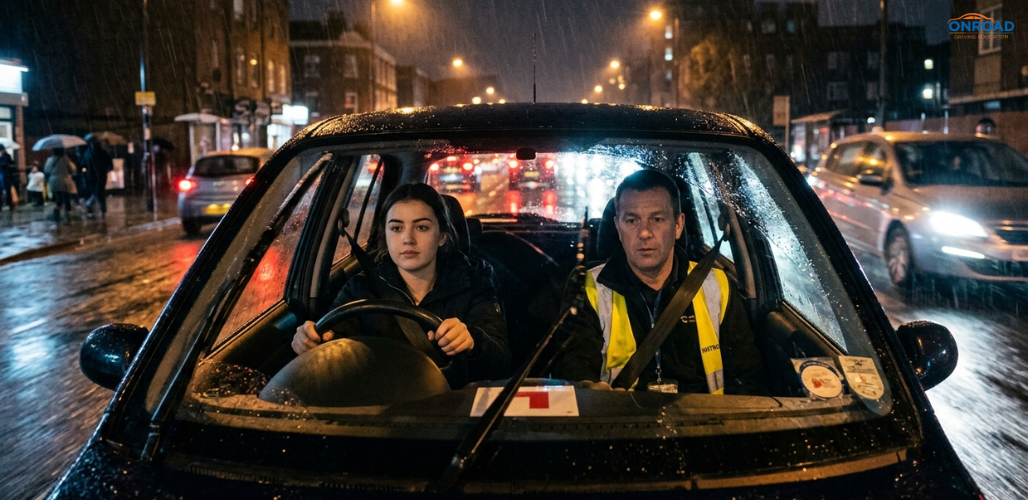
This article discusses when learner drivers are ready for night driving and poor weather conditions, how to introduce challenges gradually, and practical tips for keeping every practice session safe and productive.
Don't Rush the Hardest Conditions
Driving instructors have a big responsibility on their shoulders to prepare the learners for different road challenges like night driving, changing weather, traffic, etc. So, they often feel pressure to expose learners to every possible driving condition as quickly as possible. Whether it’s driving in heavy traffic, braving harsh weather, or driving at night, starting early will only help them deal with these conditions better, right? Not necessarily. You don’t begin learning to swim directly in deep water. Similarly, when learning to drive, you can’t explore driving in challenging conditions if you’re not ready. It will only overwhelm you and hurt your confidence. Whether you're learning independently or taking driving lessons from a Sydney Driving School, the goal isn't to master driving in challenging conditions quickly. Your goal instead is to face these conditions safely, gradually, and at the right stage of your learning journey.
Why Timing Matters More Than Conditions
You’d argue that handling tough conditions, like rain, darkness, or reduced visibility from early on, can make you better prepared. However, it doesn’t really work that way. Poor weather conditions and night driving don’t add new skills to your driving skill set. They only make it harder for you to use your existing skills. So, you need to strengthen your basics first and become physically, skill-wise, and mentally ready to handle tougher challenges. You must first master:
-
Smooth steering and braking
-
Maintaining lane position
-
Managing intersections
-
Observing hazards
-
Making safe decisions in normal traffic
For example, if you occasionally forget mirror checks during the day, you’re even more likely to miss hazards at night. If you struggle with speed management in good weather, won’t wet roads make it tougher? Poor conditions expose weaknesses that daylight often hides. That’s why most driving school instructors ask you to wait until you feel calm and confident in everyday driving situations before introducing you to other challenges.
A Step-by-Step Progression Works Best
It’s said that slow and steady wins the race. Indeed, the safest approach here is gradual exposure. You can start with learning to drive during dusk. These 30 to 60 minutes before full darkness will let you experience driving in changing light conditions without the added challenge of complete darkness. You can practise turning on headlights, judging distances, and adapting to reduced visibility.
If you start feeling comfortable, the next logical step is to try driving in light rain during daylight hours. You can learn when and how to use windscreen wipers, understand how wet roads affect grip, and experience longer stopping distances while the visibility is still relatively good.
The next logical progression is night driving. You can start practising on familiar suburban roads with lower speed limits and minimal traffic. If the roads and surroundings are familiar, you’ll feel less stress and can focus on adapting to darkness.
Only after these stages should you go for more demanding situations such as heavy rain, unlit roads, motorway driving at night, or high-traffic conditions. Building your confidence before increasing the complexities is key to learning to drive safely in all situations.
How to Stay Safe in Poor Conditions
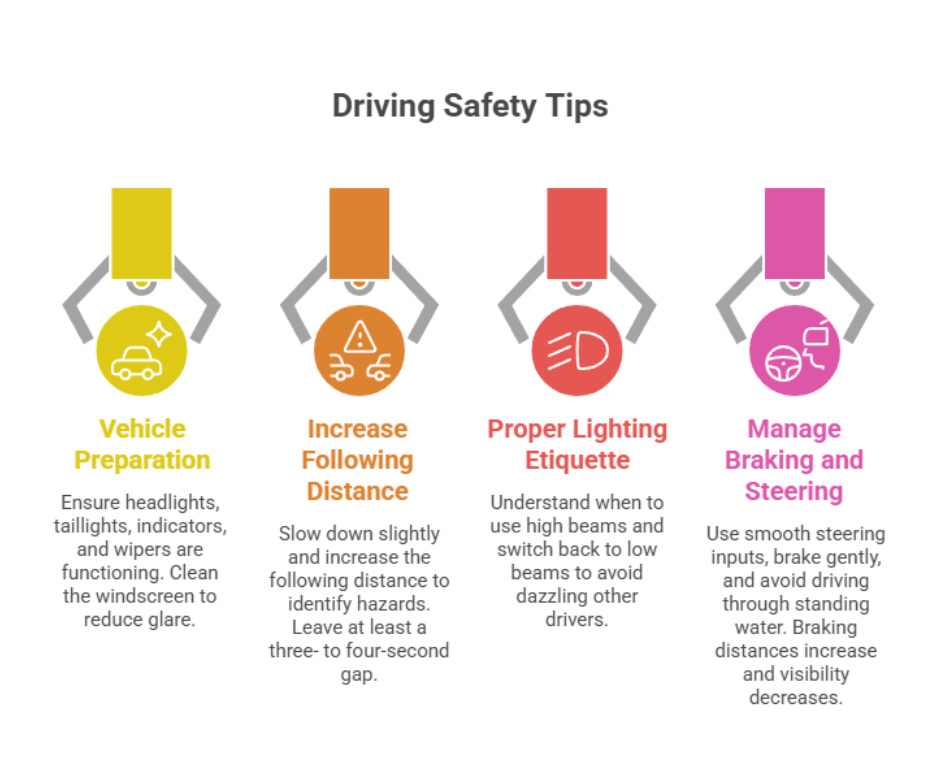
One of the simplest ways to stay safe is ensuring your vehicle is well-prepared for the challenges. Before any practice session, check that your headlights, taillights, indicators, and wipers are functioning properly. Also, clean the windscreen, both inside and out, as it can significantly reduce glare from oncoming headlights.
Increase Following Distance - When you’re driving with low visibility, you need more time to identify potential hazards and respond appropriately. In such situations, you should slow down slightly and increase the following distance. A good rule of thumb is to leave at least a three- to four-second gap from the vehicle ahead.
Learn Proper Lighting Etiquette - Lighting etiquette is another important skill all drivers should know. You should understand when to use high beams on dark, open roads and when to switch back to low beams to avoid dazzling other drivers.
Manage Your Braking and Steering - Driving in wet weather always comes with additional challenges. The road feels different, and your control over the vehicle also reduces. You’ll notice that braking distances increase, visibility decreases, and sudden steering movements become riskier. That’s why you should try to use smooth steering inputs, brake gently, and avoid driving through standing water. Even shallow floodwater can be deeper or more dangerous than it appears.
Most reputed Sydney driving school and programs like the Safer Drivers Course often focus on hazard awareness and decision-making because these skills become even more important when conditions deteriorate.
Final Thoughts
Learning to drive in poor conditions is an important part of becoming a safe and capable driver. However, timing matters. The safest learners are not necessarily the ones who face difficult conditions first. They're the ones who develop strong habits, confidence, and awareness before adding extra challenges. Whether you're learning at home or getting professional driving lessons from reputed Sydney Driving Schools, gradual exposure is the key to success.
At Onroad Driving School, we have our experienced instructors who can help you build confidence in all conditions through structured training and real-world experience. From daytime driving to night driving and wet-weather practice, our team is committed to helping learners become safer, more capable drivers for life.
Frequently Asked Questions
Q1. When should a learner driver start practising at night?
A: Once they are confident and comfortable driving independently in normal daytime conditions.
Q2. Is rain or night driving harder for learners?
A: Both present challenges, but night driving often reduces visibility while rain affects both visibility and vehicle grip.
Q3. Should learners practise in heavy rain?
A: Only after they have developed confidence in light rain and normal conditions under supervision.
Q4. How much following distance should learners leave in wet weather?
A: A minimum of three to four seconds is recommended in poor conditions.
Q5. Why is dusk a good starting point for learners?
A: It allows learners to gradually adapt to changing light conditions before driving in complete darkness.