What This Article Covers
In this article, we’ll explore how the NSW Hazard Perception Test works, what skills it assesses, how to recognise developing hazards, why timing matters, and how learner drivers can prepare effectively before their HPT.
The HPT Is More Than Spotting a Hazard
What’s the biggest challenge when you’re learning to drive? Is it learning the different maneuvers? Or is it remembering the many rules and road etiquette? No, the biggest challenge when driving is to recognise and respond appropriately to the many hazards and varying conditions on the road. Imagine you’re approaching an intersection while driving and notice a pedestrian near the road and another vehicle parked ahead. You can sense that something could happen, but simply knowing that isn’t enough. The difficult part is knowing when and how to react in such a situation. That’s why most Sydney driving schools emphasise teaching hazard perception to their learners. And, if you’re a new learner in NSW, the NSW Hazard Perception Test (HPT) is an important step before the NSW driving test. The Hazard Perception Test isn’t simply about spotting dangers on the road. It tests whether you can recognise potentially hazardous situations and respond appropriately. So, before you start preparing for the HPT, it helps to understand what the test actually involves and how you can prepare for it.
What Is the NSW Hazard Perception Test?
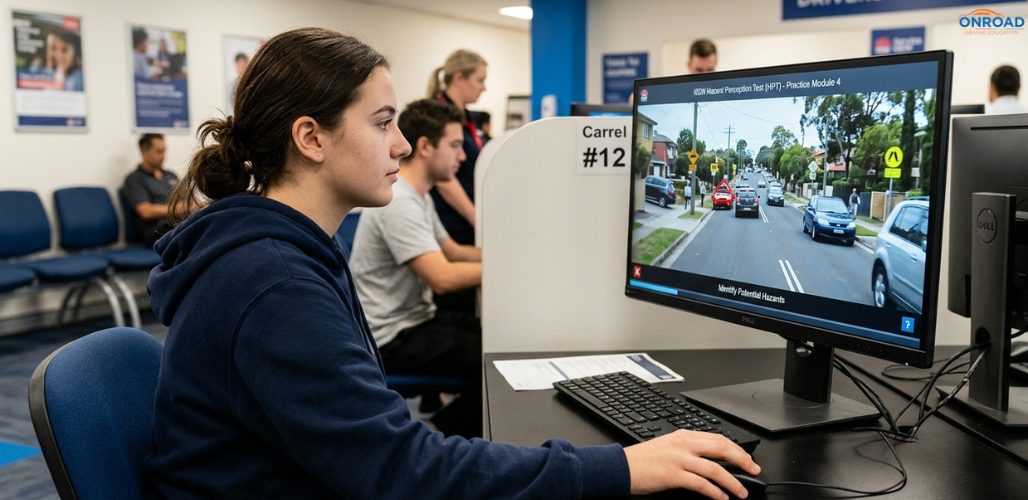
The NSW Hazard Perception Test (HPT) is a computer-based test you need to pass before you can take the practical Driving Test and apply for your P1 licence. Simply put, this test checks whether you recognise potentially dangerous situations on the road and how well you can respond to them. It contains 15 short videos and two practice videos to help you understand how it works before the actual test begins. During the videos, you’ll be asked to touch the screen to show when you would slow down, overtake, or turn at an intersection. Here are some simple tips to help you prepare well and pass your HPT on the first try:
Don't Click Just Because You See a Hazard
One of the biggest mistakes learners make is assuming that anything unusual on the road automatically means you should react. But that’s not what hazard perception is all about. Instead, hazard perception is about knowing when and how to react to a potential hazard. For example, if there are pedestrians standing near the road, they might not be about to cross. Or if there’s a car approaching an intersection, it might not enter your path. So, instead of instantly reacting to every possible risk, ask yourself what is changing on the road, what you should do about it, and whether this is the right time to do it. You should first watch how the situation develops and then consider whether it requires you to change your driving.
Timing Matters More Than You Think
So, now we know that hazard perception isn't only about spotting a potential problem. You also need to recognise when the situation has developed enough for you to respond. If you react too early, you might end up responding to something that isn’t actually affecting your driving yet. But if you wait too long and react too late, you might miss the safest opportunity to slow down, take a turn, or respond appropriately. So, how soon is too soon, and how to know the right time to react? There’s no definitive answer to this question. You must try to think about what a safe driver would do as the situation develops rather than looking for a quick answer.
Look at the Whole Traffic Situation
When watching a video, it’s easy to focus on the most obvious thing, but hazards can develop elsewhere. So, instead of focusing only on the obvious highlight, look beyond the car directly in front of you and consider what other road users might do next. Ask yourself questions like: Could a vehicle pull out? Is someone approaching the edge of the road? Is your view blocked by a parked car? Could traffic ahead suddenly slow down? Building this kind of awareness during your normal driving will also help you become a safer driver on the road.
Practise Hazard Perception While You Drive
You don't need to wait until an approaching HPT to practise these skills. Rather than treating HPT preparation as something you do separately from driving, you should try to inculcate the practice of perceiving and responding appropriately to hazards in your regular driving practice. So, when you’r taking your normal driving lesson, ask yourself questions such as, “What could happen next?” or “What would make me slow down?” A good driving school should help you develop these skills during everyday driving, including observation, gap selection, speed management and anticipating other road users.
Use the Right HPT Preparation Resources
How you prepare for your test does make a big difference in whether you can clear it in First Go. NSW Government recommends reading the Hazard Perception Handbook, brushing up on safe driving behaviour, getting as much driving experience as possible and completing the Safer Drivers Course. However, be careful when trying third-party websites offering HPT practice tests. Since these are not the official HPT by the NSW Government, they may not be the same as the official HPT.
Don't Rush to Book Your HPT
NSW Government recommends booking when you're close to being ready for the Driving Test. Once you pass, your HPT result is valid for 15 months, so you'll need to pass the Driving Test within that period or take the HPT again. So, if you're under 25, you can take the HPT after holding your learner licence for at least 10 months. And if you're 25 or older, you can take it when you feel ready.
Think Like a Driver, Not a Test Taker
Passing the HPT isn't about memorising when to click. It’s about learning to recognise situations that are developing into hazards and understanding when your driving needs to change. The best way to prepare for your HPT is to build these skills through real driving experience, not simply learn what you think the test wants. A professional driving lessons can help you practise these skills in real traffic. Whether you’re learning with a Sydney Driving School or building experience with a supervising driver, focus on understanding why you need to respond, not just what you think the test wants.
If your HPT is coming up and you want practical, instructor-guided preparation, book your next driving lesson with Onroad Driving School and start building the skills you need to drive with greater confidence and awareness.
Frequently Asked Questions
Q1. What is the NSW Hazard Perception Test?
A: The NSW Hazard Perception Test (HPT) is a computer-based test that assesses your ability to recognise potentially dangerous situations and respond appropriately. You need to pass it before taking the practical driving test for your P1 licence.
Q2. How many videos are in the NSW HPT?
A: The HPT includes 15 test videos, with two practice videos before the actual test begins. The scenarios cover different road and traffic situations where you need to identify when you would respond.
Q3. What does the NSW Hazard Perception Test assess?
A: It assesses how well you recognise developing hazards and respond to them. The test looks at your ability to make appropriate decisions about situations such as slowing down, overtaking or turning.
Q4. How can I prepare for the NSW Hazard Perception Test?
A: Start by reading the NSW Hazard Perception Handbook and gaining plenty of real-world driving experience. You can also develop your hazard awareness through professional driving lessons and the Safer Drivers Course if you’re eligible.
Q5. Are online HPT practice tests useful?
A: Third-party HPT practice tests are not the same as the official NSW HPT. Use the NSW Hazard Perception Handbook and focus on developing real hazard perception skills rather than simply memorising answers from practice questions.
Q6. When can I take the HPT in NSW?
A: If you’re under 25, you can take the HPT after holding your learner licence for at least 10 months. If you’re 25 or older, you can take it when you feel ready.