What This Article Covers
Learn the five most common mistakes parents make when supervising learner drivers, why these habits increase stress, and how to create a calmer, safer, and more productive learning environment.
You Want to Help... But Are You Helping?
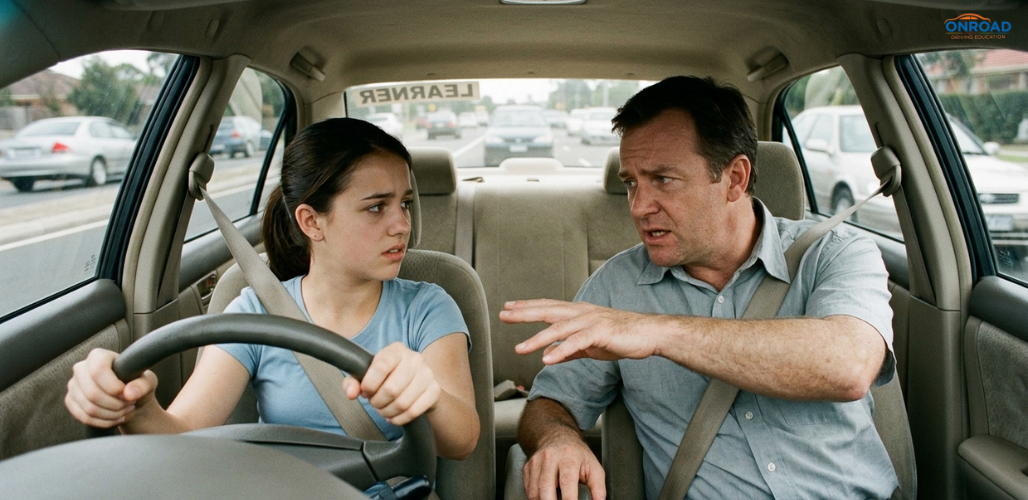
For parents, the first time they sit in the passenger seat while their child drives is a uniquely memorable experience. One moment you’re gripping the door handle too tightly, and the next moment you’ll be shouting at your kid to manage their speed or be careful with turns. Every parked car, roundabout, or pedestrian suddenly feels like a potential hazard. So, it’s natural for you to want to protect them.
However, you’ve developed safe driving habits after years of practice and experience. So, you easily recognise risks that they may not even notice yet. Shouting instructions at them in a pressured moment won’t teach them anything. You need to realise that kids don’t learn from your instructions alone. They also learn from your reactions. A sudden gasp, a raised voice, or a last-second command can sometimes create more panic than the road itself. Whether your child is learning to drive with you or taking a driving lessons through a Sydney Driving School, your role is the same. Help them become a calm, independent, and safe driver. And for that, you must first recognise what you’re doing wrong as supervisors and correct it.
Here are some common mistakes most parents make when they’re in the passenger seat.
1. Giving Instructions at the Last Second
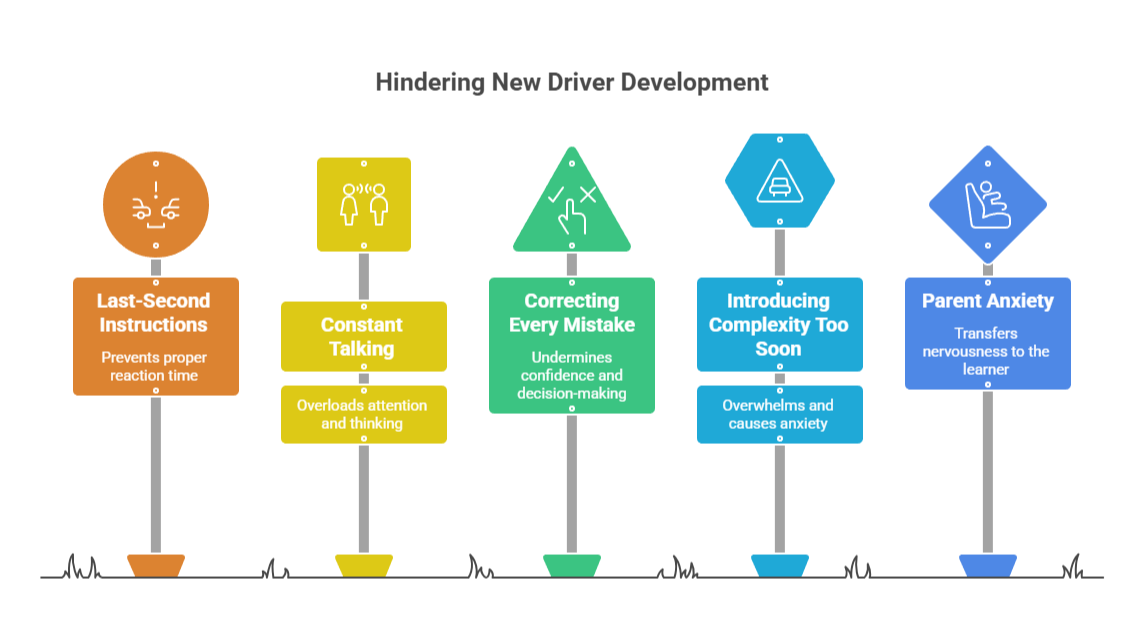
When you give out commands like turn left or slow down suddenly, it's hard for learners to follow them immediately. They need more time to prepare and follow an instruction. Now, it’s understandable that you won’t give late instructions on purpose. You probably notice a situation too late and react instinctively. However, such sudden reactions don’t leave much time for learners to think and react themselves. They end up braking abruptly, changing lanes unsafely, rushing through traffic, or becoming flustered and confused. Instead of learning to look out for and anticipate hazards, they start relying on someone else to make decisions for them.
What you should do instead is give instructions earlier and guide them in proper response. Give them enough time to observe, think, and react to the changing road situations safely. Teach them to judge, not just react.
2. Talking Through the Entire Drive
As parents, it’s normal for you to feel the need to correct your child on everything. However, you don’t need to comment on everything they do. You may be reminding them of good habits like checking the mirrors and maintaining speed with good intentions. However, if you’re talking too much and commenting on every single thing, it can overload your child’s mind and divert their attention in many different directions. You need to remember that driving is more than just controlling the vehicle. It’s about staying aware and alert, constantly observing the road, processing information, making decisions, and reacting appropriately. You must give them opportunities to practise these thinking skills independently by staying silent instead of constantly commenting.
3. Correcting Every Small Mistake
When you’re supervising your kid’s driving, remember that they’re still learning and cannot drive perfectly yet. They will surely make mistakes, but you don’t need to correct every mistake immediately. If you interrupt them constantly with corrections, they’ll start doubting their decisions and relying on you to decide for them. There's an important difference between correcting a critical error that affects safety and discussing a learning opportunity. If your kid forgets to check the mirror before changing lanes, you must correct them immediately because it’s about safety. However, if their parking isn’t straight or they're braking a little harder than necessary, you can wait until you’re safely stopped to discuss these errors.
4. Introducing Difficult Situations Too Soon
As parents, you understandably want your kids to experience every type of driving before their test. The intention is good, but confidence develops progressively. If your child has only just become comfortable on quiet suburban roads, introducing them to peak-hour traffic or complex multi-lane roundabouts the following weekend won’t help. Driving after dark or in heavy rain shouldn't simply become another item to tick off the logbook. Let them practise on suburban roads until they’ve mastered quiet streets, and you think it's time for multi-lane roundabouts and other complex challenges. Building confidence before adding complexity helps them stay calm, think clearly, and develop safer habits that last well beyond the driving test.
5. Letting Your Own Anxiety Become Theirs
Children are very good at reading their parents’ body language. So, if you’re tensing up every time another car approaches or gripping the dashboard too tightly, they’ll realise you’re nervous and assume something is wrong. If they weren’t nervous before, they’ll become anxious after seeing your reaction. That’s why you must learn to stay calm when supervising your kid’s driving. Now, that doesn’t mean you ignore their mistakes. It just means you respond to these errors in a way that helps them focus better instead of feeling frightened. Professional driving instructors have this skill of staying calm and collected while pointing out mistakes and teaching learners to correct them. That's one reason many learners benefit from combining supervised practice with structured driving lessons or programs like the Safer Drivers Course.
Final Thoughts
Learning to drive is not just mastering the controls of a car, but also building confidence, developing sound judgement, and learning to make safe decisions independently. And you play an enormous role in that journey. Whether your child is preparing for a driving test with you or taking driving lessons with a Sydney driving school, your job as supervisors is to encourage them calmly and avoid the above-discussed mistakes. If you supervise them in a calm and supportive manner, your child is more likely to enjoy driving, develop confidence, and become a safer driver.
At Onroad Driving School, we work alongside parents to help learners build real-world driving skills through structured lessons, practical feedback, and proven teaching methods. Together, we can help your learner become a confident, capable, and responsible driver.
Frequently Asked Questions
Q1. What is the biggest mistake parents make when supervising a learner driver?
A: One of the most common mistakes is giving instructions too late, which can cause learners to panic and make rushed decisions.
Q2. Should parents correct every mistake a learner makes?
A: No. Safety-critical mistakes should be addressed immediately, but minor errors can often be discussed after the drive to avoid overwhelming the learner.
Q3. When should learners start practising in more challenging driving conditions?
A: Learners should first become confident on quiet suburban roads before progressing to busier roads, multi-lane roundabouts, night driving, or poor weather conditions.
Q4. Why do some learners become more nervous when driving with their parents?
A: Learners often pick up on a supervising driver's stress or anxiety. Remaining calm and giving clear, timely guidance helps create a more positive learning experience.
Q5. Can professional driving lessons complement supervised practice?
A: Yes. Professional instructors provide structured guidance and objective feedback, helping learners build confidence while reinforcing safe driving habits alongside supervised practice.