What This Article Covers
Learn how to recognise when you're ready for multi-lane roundabouts, why they feel challenging, and the practical skills that help learner drivers navigate them safely and confidently.
When Quiet Streets Stop Teaching You New Things
For most learner drivers, learning new skills and maneuvers is an eagerly anticipated wait. As soon as you have learned one skill, you’ll immediately want to go to the next one. Once you think you can steer smoothly, control your speed, check mirrors, and navigate simple intersections without feeling overwhelmed, you want to take on bigger challenges on the road. However, in driving, it's essential to master one skill before moving on to the next.
That’s why your driving school instructors are often adamant about your mastering driving in the suburbs and low traffic zones before moving on to the busier sections. They would introduce you to high-level challenges like multi-lane roundabouts only when they’re confident you can pick lanes correctly, maintain strict lane discipline, avoid crossing unbroken lines, easily find safe gaps in moving traffic, give way patiently to others, and signal correctly. Whether you're practising with family or taking driving lessons with a Sydney Driving School, learning to navigate complex roundabouts is an important step towards becoming a confident and independent driver.
How Do You Know You're Ready?
So how do you know you’re ready to move on to multi-lane roundabouts? You think you’ve mastered quiet suburban streets and can drive there safely and comfortably. But does your instructor think so, too? Most learners think that if they’re confident in their driving skills, then they’re ready to attempt the challenge of a multi-lane roundabout. The truth is, confidence usually comes after experience, not before it. What’s important is mastering the fundamentals and sticking to them. You should be able to maintain good lane positioning without constant reminders, check mirrors and cover your blind spots regularly, identify gaps in traffic and adjust your speed accordingly, and judge the correct lane for turning. If you're handling these skills comfortably on suburban roads, you're probably ready to attempt bigger tests like multi-lane roundabouts. However, you must remember that being ready doesn't mean you'll never feel nervous. It simply means you have enough skill to tackle a new challenge safely.
Why Multi-Lane Roundabouts Feel So Different
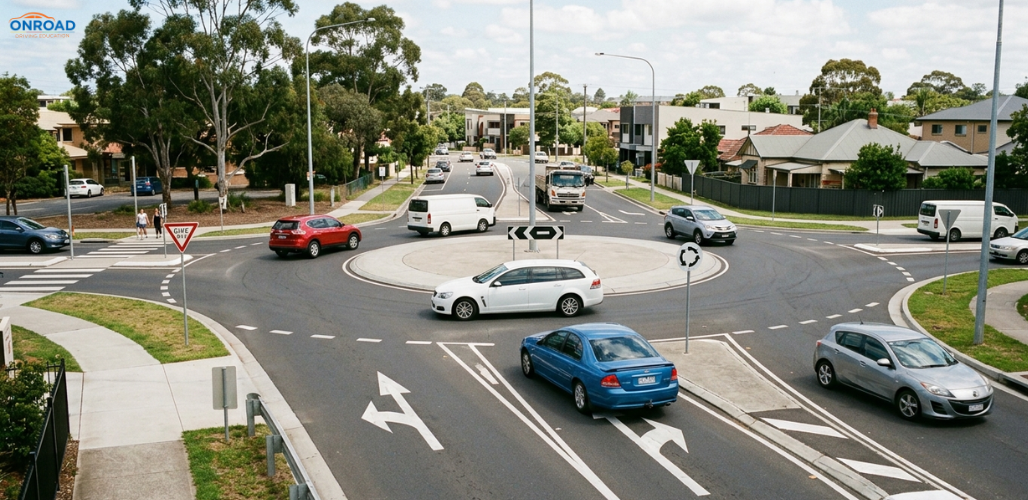
Multi-lane roundabouts are a tough challenge for any driver because there’s so much going on. When driving in such roundabouts, drivers need to make several decisions almost simultaneously. They need to be alert, aware, and decisive. So, as learners, if you find driving in multi-lane roundabouts intimidating, you’re certainly not alone.
When driving on a quiet residential street, you might only think about steering correctly, maintaining speed, and handling the occasional parked car. But at a busy multi-lane roundabout, you need to read signs, select the correct lane, check mirrors, observe other vehicles, judge gaps, and plan your exit all at once. It’s much like levelling up in your favourite mobile game, with the difficulty level increasing suddenly. Experienced drivers process this information automatically because they’ve practised a lot in these situations. But for learner drivers, this is a big learning curve.
Start Small and Build Confidence
So, now you know why multi-lane roundabouts are such a challenge. What should you do? Jumping straight into the busiest roundabout you can find without ample practice is definitely one of the biggest mistakes you can make. Instead of rushing into it, you should build your confidence gradually. You can start with quieter multi-lane roundabouts outside peak traffic periods and choose locations where traffic is steady but manageable. Once you're comfortable, you can move on to practising different exits. It will help you become familiar with lane selection and positioning from multiple directions. Confidence rarely comes from doing something once. It comes from making the unfamiliar feel familiar.
The Skills That Matter Most
When learners think about multi-lane roundabouts, they often focus on which lane to choose. While that's important, it's only one piece of the puzzle. Observation is often the skill that makes the biggest difference. Strong mirror checks, awareness of surrounding vehicles, and looking well ahead give you more time to make good decisions.
Planning ahead is equally important. The earlier you identify your exit and position your vehicle correctly, the less pressure you'll feel as you approach the roundabout. Speed management also plays a major role. Entering too quickly reduces your ability to observe and react. Slowing down appropriately gives you more time to process what's happening around you.
That’s why in most Sydney driving school and programs, like the Safer Drivers Course, instructors insist on developing observation, hazard awareness, and decision-making skills in learners because these skills can help them handle more complex road environments with confidence.
Every Experienced Driver Started Here
It’s natural to feel nervous about a tough challenge like the multi-lane roundabouts. Even the most seasoned drivers got nervous about these challenges in their learning days. The difference is that they kept practising. Multi-lane roundabouts aren't difficult because they're impossible to understand. They're challenging because they require you to combine several driving skills at the same time. With practice, those skills begin working together naturally.
Whether you're preparing for your driving test or simply building experience, learning to navigate more complex roads is an important step towards becoming a safer and more capable driver. At Onroad Driving School, we help learners move beyond quiet streets and build confidence in real-world driving situations. We have a team of experienced instructors who offer structured driving lessons, practical guidance, and local knowledge to help you develop the skills needed to handle everything from residential roads to busy multi-lane roundabouts with confidence.
Frequently Asked Questions
Q1. When should I start practising multi-lane roundabouts?
A: Learners should start practising multi-lane roundabouts once they are comfortable with basic vehicle control, lane positioning, mirror checks, and driving independently on suburban roads.
Q2. Why do multi-lane roundabouts feel harder than normal roundabouts?
A: They require drivers to process more information at once, including lane selection, traffic gaps, road signs, surrounding vehicles, and exit planning.
Q3. What is the biggest mistake learners make at multi-lane roundabouts?
A: Many learners focus too much on choosing the correct lane and forget to maintain good observation and awareness of surrounding traffic.
Q4. How can I build confidence at busy roundabouts?
A: Start with quieter multi-lane roundabouts, practise outside peak traffic times, and gradually increase the complexity of the roads you drive on.
Q5. Can driving lessons help with multi-lane roundabouts?
A: Yes. A professional driving instructor can help you understand lane positioning, improve observation skills, and build confidence in more complex traffic situations.