A Quick Look Ahead
In this article, we share practical tips to help NSW learner drivers calm driving test nerves, prepare properly the night before, improve confidence, and feel more relaxed and focused on test day.
So, you’re appearing for your NSW driving test tomorrow, and you’re nervous. It’s normal to feel anxious before such an important milestone. And the night before your driving test can feel strangely intense. No matter how prepared and confident you are, you are likely to find yourself lying awake thinking about your weaknesses and every possible mistake you could make. In fact, most learners at a Sydney Driving School experience some level of anxiety before test day. A completely normal and unsurprisingly common reaction! So, how to rein in your nerves the night before and get a good sleep? The key is to learn how to manage the nerves and retain your focus and confidence. You must learn to calm your mind, trust your preparation, and prepare yourself to perform well tomorrow. This blog explores how you can overcome nerves the night before the test and why joining a good driving school makes a difference.
Preparation Reduces Panic
Being well-prepared is always a good way of getting rid of nerves. Most learners are anxious due to uncertainty. No matter how good you are, your brain still keeps asking questions like did I forget something? Or what if I make a mistake and fail tomorrow? All hypothetical and yet no less disruptive. Preparing everything early is a simple yet effective way to reduce stress and ensure you are calm and composed in the morning. Here are some things you should prepare the night before:
-
Your learner's licence
-
Logbook confirmation or app details
-
Any required documents for Service NSW
-
Glasses or contact lenses if you drive with them
If you are using your own car for the test, check it thoroughly as well. Make sure the lights work, the tyres look fine, and the vehicle is clean and organised.
Don’t Try to “Cram” Driving
Are you thinking of preparing for your test in the morning like a child prepares for the morning exam? Because a marathon all-night study session on driving isn’t going to help you much in the test. If you’re going to rewatch videos, reread every road rule, or overanalyse manoeuvres for hours, you’ll only get tired and stressed rather than becoming confident. You don’t want to learn something new at this stage; just refresh your memory gently and trust your training and driving skills. And when you want to review or revise some moves, go over:
-
Reverse parallel parking
-
Kerbside stops
-
Observation checks
-
Hazard perception habits
Your Mind and Body Matter More Than You Think
Driving isn’t as easy as people think. It requires concentration, decision-making, and calm reactions. And if you’re tired, overwhelmed, or dehydrated, it becomes harder to focus and stay alert. So, the night before your test, it’s essential that you get a proper night’s sleep, at least 7-8 hrs. Also, drink enough water to stay well hydrated during the test. If you’re in the habit of drinking coffee to unwind at night, skip it on the night before the test, and if you have to take it, avoid taking excess caffeine. You might not realise it, but anxiety often feels worse physically than mentally. A racing heartbeat or tense stomach does not mean you are unprepared. It simply means your body recognises the test is important to you. So, stay away from stressful scrolling on social media. Instead, go for a short walk or light exercise to release the nervous energy and improve your sleep quality.
Book A Pre-Test Driving Lesson
One of the best ways to settle nerves before the test is to book a driving lesson immediately beforehand. A professional driving instructor can:
This is not about relearning how to drive. It’s about helping your brain switch from anxious thinking into confident driving mode. Many learners feel dramatically calmer after a short pre-test session because they enter the test already focused and comfortable in the car. Programs like the Safer Drivers Course also help learners build confidence by improving hazard awareness and decision-making under pressure.
Remember What the Examiner Is Actually Looking For
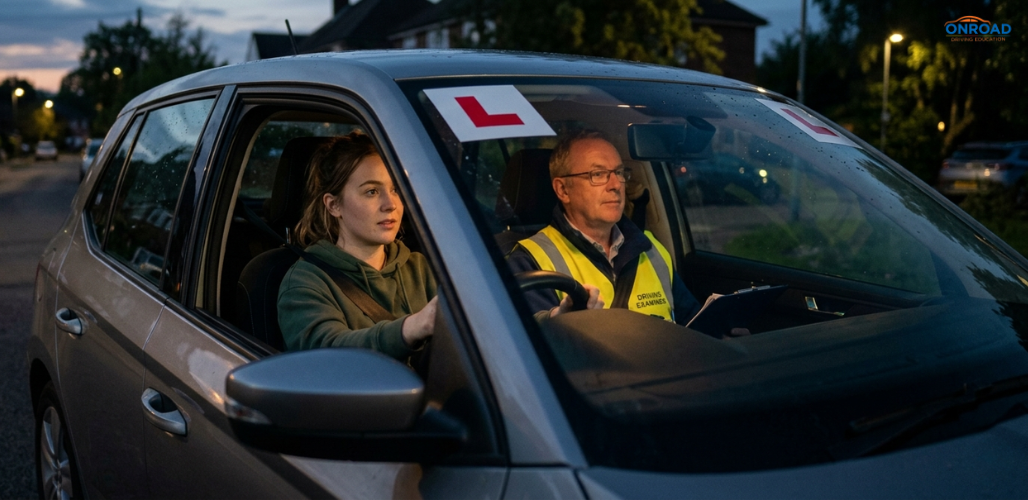
A lot of learners imagine the examiner is searching for tiny mistakes. In reality, they are mainly looking for one thing: safe and predictable driving. You do not need to drive perfectly. If you make a small mistake, don’t panic. Many learners lose focus because they dwell on one minor error instead of continuing calmly. Safe drivers recover, refocus, and keep driving responsibly.
Final Thoughts
Driving test nerves are normal because the test matters to you. But remember this: you have already done the hard work. Your driving test is simply an opportunity to show the examiner the safe driving habits you’ve already built. Whether you are preparing independently or learning through a Sydney Driving School, confidence usually comes from preparation, not perfection.
At Onroad Driving School, we help learners build calm, confident, real-world driving skills that go far beyond test day. If you want extra support before your NSW driving test, book a pre-test driving lesson with Onroad Driving School and walk into your test feeling prepared, focused, and ready.
Frequently Asked Questions
1. Is it normal to feel nervous before a driving test?
A: Yes. Most learner drivers feel anxious before their driving test, even if they are well prepared.
2. Should I practise driving the night before my test?
A: Light practice is fine, but avoid overdoing it or trying to learn new skills at the last minute.
3. What should I bring to my NSW driving test?
A: Bring your learner's licence, required documents, logbook confirmation, and glasses or contacts if needed for driving.
4. Does a pre-test driving lesson help with nerves?
A: Yes. A pre-test driving lesson or mock test can help learners feel calmer, more focused, and more confident before the actual test.
5. What happens if I make a small mistake during the driving test?
A: Small mistakes do not always mean failure. Examiners mainly look for safe, controlled, and predictable driving overall.