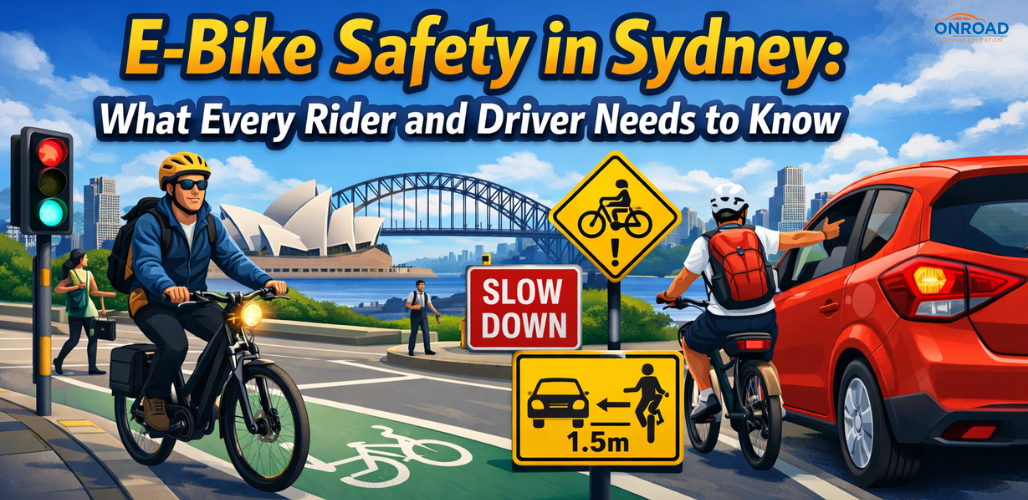
What This Article Covers
E-bikes are becoming a normal part of daily travel across Sydney, but many road users still underestimate how fast and unpredictable they can be. This guide explains the real risks, common mistakes riders and drivers make, and practical safety tips to help everyone share the road more confidently.
The New Reality of Sydney Roads
Imagine you’re driving past a busy Sydney school zone, preparing to turn, and suddenly an e-bike glides past you. It’s faster and quieter than you would expect an e-bike to be, increasing the risk of collision. Moments like this are becoming increasingly common across CBD bike lanes, suburban streets, and shared pedestrian spaces. While the e-bikes look like ordinary bicycles, their speed, weight, and silent movements are very different. You’d be surprised how quickly an e-bike can appear in your blind spot or cross you at an intersection. For drivers, this means being aware and thinking ahead in ways that weren’t necessary before.
With more e-bike riders taking to the streets, Sydney driving school emphasise teaching learner drivers and riders alike how to anticipate e-bike movements in flowing traffic. Whether you’re new to driving or refreshing your skills through a Safer Drivers Course, adapting to this new reality is essential for staying safe. At Onroad Driving School, we focus on helping drivers understand the challenges these e-bikes present to road safety.
Why E-Bikes Change the Way We Share the Road
While bicycles are agile and motorcycles are fast, e-bikes combine both. E-bike riders can accelerate quickly, maintain high speeds for a longer time, and squeeze through small spaces. These abilities affect traffic flow, especially in busy areas, changing the way we share roads.
Because e-bikes are heavier than standard bicycles, they require longer stopping distances. So, an e-bike rider may find it difficult to stop or even slow down quickly in emergencies, particularly on busy streets or downhill roads. Their quiet approach also creates risk as pedestrians and drivers often rely on sound cues, and when those cues disappear, reaction times shrink. In areas like light rail corridors, school zones, and shopping streets full of pedestrians, this combination of speed and silence means everyone on the road must be extra careful.
The Biggest Risks Most Road Users Don’t Realise
E-bikes may look harmless, but several hidden risks make them more complex than traditional bicycles. Understanding these risks helps both riders and drivers make safer decisions on busy Sydney roads.
Misjudging Speed
We often assume that cyclists would move slowly. E-bikes, however, can accelerate quickly and reach intersections or merge into traffic much faster than expected. This reduces reaction time, causing us to brake suddenly or avoid near misses more often.
Blind Spots and Visibility Issues
E-bikes are smaller than cars but faster than bicycles. So, they can move faster and disappear quickly beside larger vehicles, especially buses and trucks. And, in multi-lane traffic, they are difficult to track, making it essential to do frequent mirror checks.
Limited Protective Gear
Some riders travel without helmets, reflective clothing, or proper lighting, reducing visibility and increasing their chances of getting hurt. This low visibility can lead to drivers misjudging distance or speed, particularly during early mornings, evenings, or rainy conditions.
Illegal or Modified E-Bikes
With the advancement of technology, high-powered conversions and non-compliant fat bikes are becoming more common. These bikes travel faster than drivers expect and increase crash risk. They exceed the typical 250W limit, which is why they’re illegal according to NSW pedal-assist guidelines.
Unsafe Riding Environments and Behaviour
Most drivers often underestimate the unpredictability of driving on busy shared paths, school zones, and shopping areas. So, if you’re distracted, whether due to mobile phones, earbuds, or sudden direction changes, you’ll be less aware and create dangerous situations for everyone nearby.
Maintenance and Charging Risks
If your vehicle or e-bike is not well-maintained, it can hurt you as well as others. Poorly maintained brakes, worn tyres, or damaged batteries can turn a small hazard into a serious accident. For riders, this includes unsafe charging practices. So, don’t leave your ebike batteries charging unattended overnight, or you risk electrical fires.
Safety Tips for Riders and Drivers
E-bike safety is a shared responsibility, so both riders and drivers need to bear its weight. Small adjustments can go a long way in helping you stay safe and compliant.
For Drivers
-
Remember to check mirrors more frequently, especially before turning or changing lanes.
-
When you drive alongside e-bike riders, remember to give them wider passing space, more than you would for a standard cyclist.
-
Expect sudden movements or changes in speed.
For Riders
-
Stay visible with lights, reflective gear, and bright clothing.
-
Avoid headphones or phone use while riding.
-
Maintain brakes and tyres regularly.
-
Choose a compliant e-bike that meets NSW standards.
-
Wear an approved helmet every ride.
-
Charge safely using approved chargers and avoid overnight unattended charging.
To implement these changes, you need drivers who are more aware and better educated in driving. Driving education plays a huge role here. It’s time Sydney driving schools start focusing on teaching learners proper hazard awareness, anticipating movement patterns and staying calm in fast-changing situations. Structured training through programs like the Safer Drivers Course is the best way to do that.
Fast Bikes Need Smart Decisions
E-bikes are now part of everyday life on Sydney roads, and they’re here to stay. As traffic environments evolve, safety depends on awareness from riders, drivers, and pedestrians alike. Small decisions, like checking mirrors earlier or choosing safer riding habits, can prevent serious incidents.
If you want to learn how to drive in such changing modern traffic conditions, join a driving program with a trusted Sydney Driving School, like Onroad. At Onroad Driving School, we offer practical driving lessons and Safer Drivers Course training designed to help you anticipate real-world hazards and share the road safely with every type of road user.
Frequently Asked Questions
Q1. Are e-bikes legal in NSW?
A: Yes, but only compliant models are allowed. Most legal e-bikes must follow pedal-assist rules and meet power limits such as 250W standards.
Q2. Why are e-bikes considered more dangerous than regular bicycles?
A: They accelerate faster, travel at higher speeds, and are heavier, which can increase stopping distance and surprise other road users.
Q3. Do drivers need to treat e-bikes differently?
A: Yes. Drivers should expect faster movement, check mirrors more often, and allow extra space when passing.
Q4. Is helmet use mandatory for e-bike riders in NSW?
A: Yes. Riders must wear an approved helmet at all times when riding on public roads or paths.
Q5. How can learner drivers prepare for sharing the road with e-bikes?
A: Taking structured training or a Safer Drivers Course helps learners understand hazard perception and adapt to modern road environments.