
What This Article Covers
This article explains why observation is the key to mastering a 3-point turn, how to improve visual scanning, and the common mistakes NSW learners make during driving tests.
What Examiners Actually Watch During a 3-Point Turn
Most learner drivers think that a 3-point turn is all about vehicle control. But if you walk into your NSW driving test thinking your 3-point turn is a test of your steering abilities, you’re setting yourself up for an instant fail. Professional Sydney driving school instructors know that examiners focus on safe and predictable driving behaviour above all else. Instead of thinking about what their hands are doing, they want drivers to focus on their eyes. That’s why their driving lessons teach consistently checking mirrors, checking for blind spots, scanning for hazards, and maintaining awareness throughout the turn.
For examiners, visual awareness is as important as driving skills. Because the steering wheel only controls the vehicle, but your eyes control your safety during the turn. So, if you want to breeze through your 3-point turn on test day, you need to up your game on observation, awareness, and decision-making under pressure.
The 3-Point Turn Survival Guide: What Actually Matters
Learner drivers are usually worried about getting the ‘perfect’ turn, especially during the test day. But they need to remember that the main goal here is not perfection, but safety. In the NSW driving test, the examiners simply want you to complete the manoeuvre safely. Their main requirements are:
-
Finish the turn within five direction changes.
-
Avoid mounting the kerb.
-
Avoid using driveways for the turn.
-
Keep observing and stay aware of your surroundings throughout the turn.
However, there’s no need to rush through the turn. Take your time and complete the turn safely and confidently.
Step-by-Step: How to Scan Your Way Through the Turn
Step 1: Setting Up at the Kerb
The driving test examiner judges your safe driving behaviour, awareness, and hazard perception more than your driving skills. They want to see you checking the rear-view and side mirrors and covering all your blind spots before you begin moving. Once the check is done, you can indicate left and pull over smoothly near the kerb. When you do all this for the first setup before you even begin moving, it tells the examiner that you have safe driving habits.
Step 2: Signalling Your Intent to Move
Before you move away from the kerb to begin the turn, check your mirrors again. And don’t do a half-hearted peripheral vision check. Perform a clear head check toward your blind spot to ensure you have a clear view. However, there’s no need for dramatic head turns either. Just turn your head enough to ensure you get a clear view of the mirrors and your blind spots. Many learners lose marks here because they focus entirely on steering and forget observation. Once you’ve completed the check, indicate the right signal to show your intent to move.
Step 3: Crossing the Road Safely
Even when you’re steering across the road, don’t forget to keep scanning ahead. Keep an eye out for approaching traffic and stop before reaching the opposite kerb. And while you’re doing this, your eyes should keep checking the road and your surroundings, not fixed in one place. This is where nerves often cause learners to stare only at the steering wheel or kerb.
Step 4: Reversing with Full Awareness
Now that you’re starting to reverse, you need your eyes to be open and active. This is where thorough observation becomes critical. When you’re reversing, you must look primarily through the rear window. However, that’s not the only place to fix your eyes. You must also continue checking the mirrors and your surroundings. In busy Sydney suburbs or narrow inner-west streets, hazards can appear quickly. You must stay alert and aware of any pedestrians, cyclists, and vehicles on the road while you’re reversing. The main thing examiners want is for you to maintain 360-degree awareness throughout the manoeuvre.
Step 5: Before Completing the Turn
You’ve reversed successfully, and now you’re to move ahead. However, before moving forward again, you must scan left and right carefully. It’s a rookie mistake to assume the road is still clear just because it was clear a few seconds earlier. You must check your blind spots again and look for approaching traffic before you start moving to complete the turn.
Why Looking Where You’re Going Helps Control the Car
Ever had your driving instructor tell you to “look where you want the car to go”? It’s because of an important driving concept called target fixation. This concept is based on the notion that drivers steer toward where they are looking. If you stare at the kerb, you often drift toward it. So, if you focus calmly on your direction or exit path, your steering becomes smoother and more controlled automatically. It’s similar to what programs like the Safer Drivers Course teach the learners: maintaining full road awareness instead of becoming visually locked onto one object.
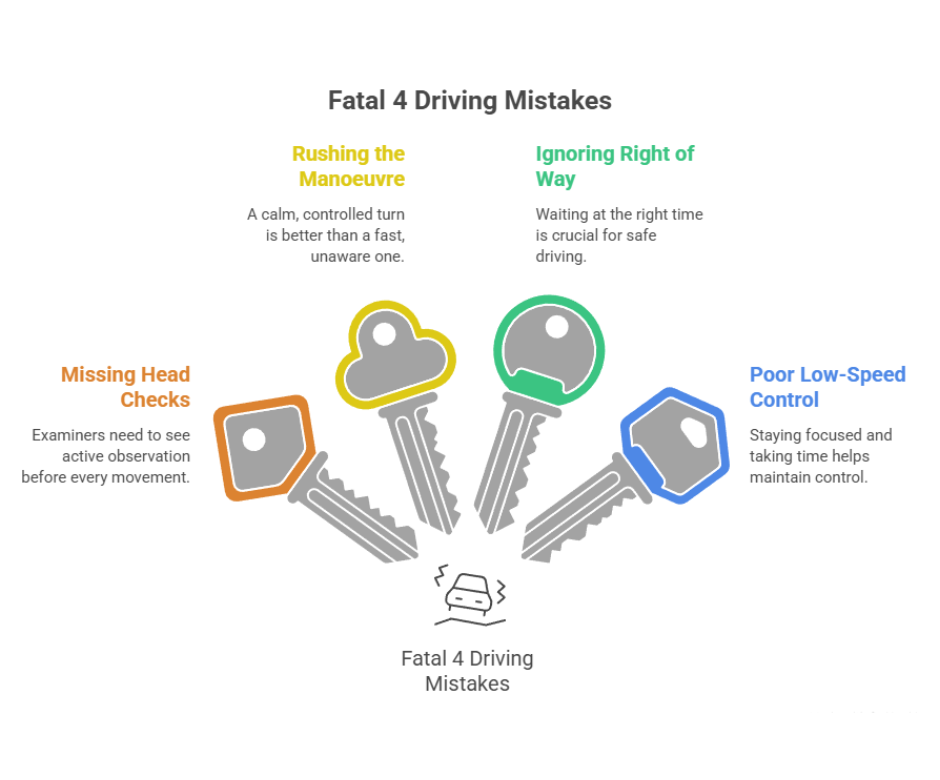
The Fatal Four Mistakes That Cause Test Fails
-
Missing Head Checks
This is one of the most common reasons learners lose marks or fail. Examiners need to clearly see active observation before every movement, not half-hearted peripheral vision checks.
-
Rushing the Manoeuvre
Many learners panic and try to complete the turn too quickly. A calm, controlled 3-point turn with proper mirror and blind-spot checks is always better than a fast manoeuvre with poor awareness.
-
Ignoring Right of Way
Most learners are in a hurry to complete the test and forget that waiting at the right time is also a part of driving. When you’re giving the test, you must remember that other vehicles have priority. You are the one performing the turn, so you must wait when necessary.
-
Poor Low-Speed Control
Mounting the kerb or misjudging spacing usually happens when learners rush or stop scanning properly. Instead, stay focused and take your time completing the turn. It will help you stay more in control of your vehicle and the turn.
Ready for Your Test? Focus on the Scan, Not the Steering
A good 3-point turn is not about impressing the examiner with speed or perfect angles. It’s about showing calm observation, awareness, and safe decision-making from beginning to end. Like many driving skills, this turn becomes easier once you stop overthinking the steering and start trusting your visual scanning habits. Whether you are learning with a family member or through a Sydney Driving School, practising proper observation techniques can dramatically improve your confidence on test day.
At Onroad Driving School, we help learners master real-world driving skills through structured driving lessons, mock driving tests, and personalised feedback designed for NSW driving test conditions. Book a driving lesson with our Sydney Driving School today and build the calm, confident scanning habits that examiners want to see.
Frequently Asked Questions
Q1. What is the most important part of a 3-point turn in the NSW driving test?
A: Observation is the most important part. Examiners closely watch your mirror checks, blind spot checks, and overall awareness throughout the manoeuvre.
Q2. How many direction changes are allowed in a 3-point turn?
A: In NSW, learners should generally complete the manoeuvre within five direction changes.
Q3. Can you fail a driving test for missing a head check during a 3-point turn?
A: Yes. Missing blind spot checks or failing to observe properly can result in lost marks or a fail because observation is a major safety requirement.
Q4. Why do learners hit the kerb during a 3-point turn?
A: This usually happens when learners rush, panic, or focus too much on the steering wheel instead of looking where they want the car to go.
Q5. Should you stop for traffic during a 3-point turn?
A: Yes. Other vehicles have the right of way while you are performing the turn, so you must wait if traffic approaches.