What This Article Covers
This article explains what to do if you lose control of your vehicle, how to handle a skid safely, and provides practical tips to prevent it from happening in the first place.
Introduction
Ever had your Sydney driving school instructor go on and on about maintaining vehicle control in their driving lessons? New learners, especially overconfident ones, underestimate the importance of this advice, thinking it won’t actually happen to them. They believe they are careful and safe drivers, so they won’t lose control of their vehicles. But there are times when even the safest drivers lose control. You might get into a collision, or there might be water or ice on the road that makes you lose control. However, in such a situation, you should remember that you can get back to safety; you just need to know how to respond calmly and correctly. When you know what to do in situations of loss of control, you can reduce the risk of a crash and regain control safely.
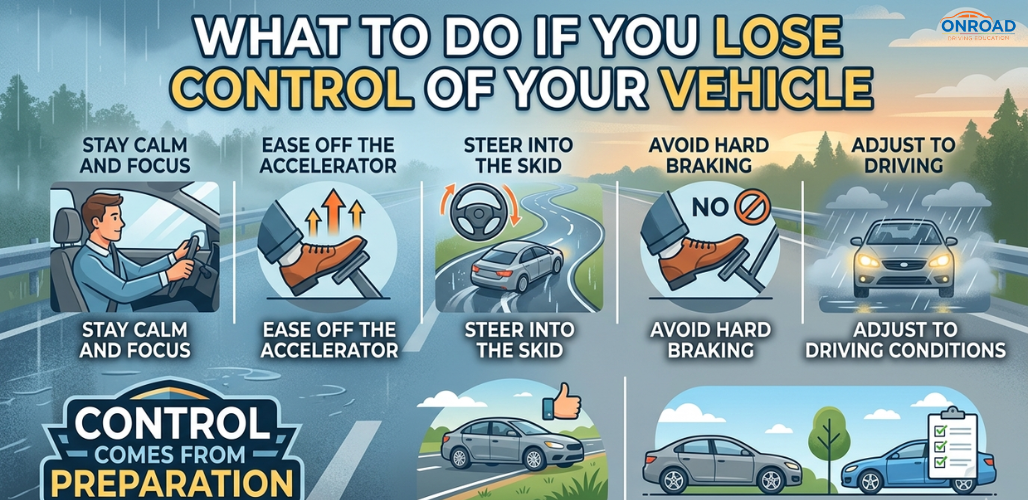
Stay Calm and Focus
Losing control of your vehicle can induce panic and cause you stress. While this reaction is completely normal, it can have dire consequences. Panic often leads to sudden reactions, such as jerking the steering wheel or slamming the brakes, which can make the situation worse. So, the first and foremost thing you must do is calm down. If you feel you’re panicking, just focus on where you want to go. Your hands will instinctively take your vehicle in that direction, helping you regain control more smoothly.
Ease Off the Accelerator
When you lose control, the instinct is to try to quickly regain control, which can lead to sudden reactions like hitting the brakes or accelerating. However, sudden acceleration can worsen the skid, so staying smooth and controlled is essential. So, when you’re facing such a situation, don’t be hasty or abrupt. Take your foot off the accelerator gently. When you ease off the accelerator slowly, the car will slow down naturally, which will help restore traction between the tyres and the road.
Steer Into the Skid
When you lose control of your car suddenly, regaining control is important. If the rear of your car has started sliding, steer in the direction of the skid. This means that if the rear of your car is going left, you should steer left. And if it is going right, you should steer right too. Steering in the direction of the skid helps realign the tyres with the direction you’re going. However, don’t oversteer or make sharp movements, as this can cause the vehicle to spin.
Avoid Hard Braking
If you brake suddenly and incorrectly while your car is skidding, it can reduce traction for the tyres and make it harder to regain control. In such a situation, if your car has ABS (Automatic Braking System), you should press the brake firmly and steadily. But if your car doesn’t have ABS, don’t press too hard on the brakes. Instead, gently pump the brakes so that you can slow down the vehicle without locking the wheels.
Adjust to Driving Conditions
Many times, the reason a vehicle skids is that the driver is not able to adapt to the changing conditions and loses control of the vehicle. It can be due to various reasons like wet roads, gravel, oil, or debris on the road, all of which can reduce tyre grip. Drivers should slow down when facing weather challenges or when road conditions are poor. You should also avoid sudden steering or acceleration, as it can worsen the situation. Also, you should ensure there’s a safe distance between you and other vehicles in front and back. Most Sydney driving school and advanced programs like the Safer Drivers Course teach these strategies to their learners to help them regain control of their vehicles easily.
Pull Over Safely
Once you regain control of your vehicle, the first thing you should do is find a safe place and pull over. Take a breather, calm down, and assess yourself and the situation before making your next move. You should make sure you’re in good condition to drive. Also, you should check your surroundings and ensure that the tyres are in good enough condition to proceed.
How to Prevent Losing Control
It is said that preventing a problem is better than reacting to it. You can reduce the risk of losing control significantly by doing some simple checks and building good driving habits. Here’s what you need to do:
-
Check tyre pressure and tread regularly
-
Maintain brakes and suspension
-
Drive to the conditions, not just the speed limit
-
Avoid sudden movements while driving
Don’t know how to check tyre pressure or drive to the conditions? Join a good Sydney driving school or enroll in a Safer Drivers Course and learn defensive driving techniques that can help.
Control Comes From Preparation
Losing control of your vehicle can happen quickly, but if you know what to do, you can prevent a dangerous situation from becoming a serious accident. Safe driving also involves thorough preparation, awareness, and smooth control. Whether you are learning through a driving lesson or improving your skills with a trusted Sydney Driving School, like Onroad Driving Education, understanding these techniques helps you stay confident and in control on the road.
At Onroad Driving School, we have expert trainers who focus on real-world driving skills, hazard awareness, and practical techniques that go beyond just passing the test. Book your driving lesson with us today and take the next step towards becoming a safer, more confident driver.
Frequently Asked Questions
1. What should I do first if my car starts to skid?
A: Stay calm, ease off the accelerator, and focus on steering in the direction you want the car to go.
2. Should I brake during a skid?
A: Avoid hard braking. If your car has ABS, apply steady pressure. If not, gently pump the brakes.
3. Why do cars lose control on wet roads?
A: Water reduces tyre grip, making it easier for tyres to lose contact with the road, especially at higher speeds.
4. Can driving lessons help prevent skidding?
A: Yes. A driving lesson with a professional instructor teaches techniques to handle different road conditions safely.
5. How can I reduce the risk of losing control?
A: Maintain your vehicle, drive to conditions, keep a safe distance, and consider training through a Safer Drivers Course.