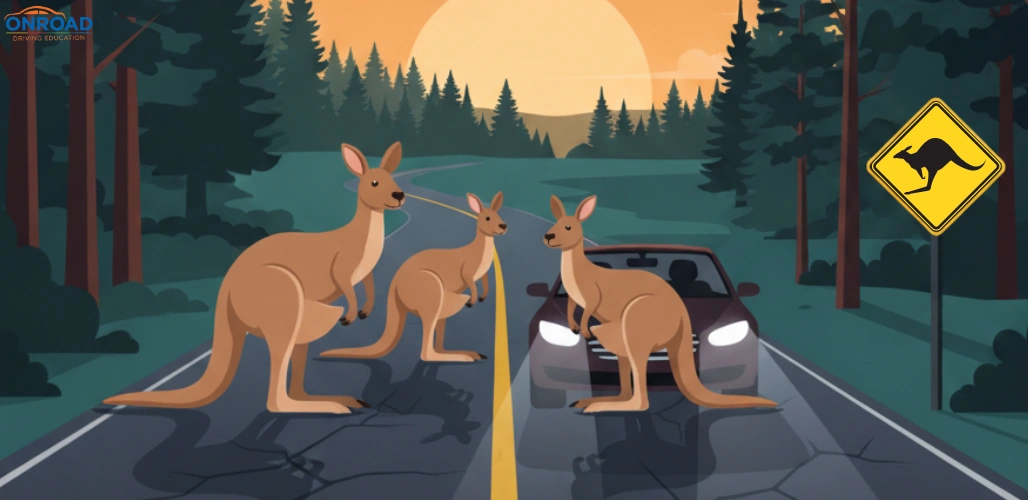
What to do when your road companions are not just other drivers and pedestrians but animals too? Driving on country roads is a completely different experience compared to the city. The scenery is beautiful, the roads are quieter, and you often feel more relaxed. But that calm comes at the price of sharing the road with wildlife and livestock. That’s why any good driving school will remind you that being prepared for unexpected encounters with animals is an essential part of safe driving. In Australia, it’s quite normal to encounter animals on the road, especially in rural and regional areas. From stray cattle to wildlife like kangaroos and koalas, you might suddenly encounter an animal on the road. Knowing how to respond calmly can help you stay safe and also save the lives of your passengers and the animals. In this blog, we’ll explore what drivers should do if they encounter animals while driving on country roads.
Look Out for Livestock and Wildlife
When a hazard comes at you suddenly while driving, handling it becomes more difficult. So, in order to be better prepared, road awareness is essential. Animals can appear suddenly, particularly at dawn and dusk when they’re most active. Scan the road ahead and keep an eye on the edges of the road where animals are more likely to linger. If you’re driving at night, use high beams in low-traffic areas to spot animals earlier—but remember to dip them for oncoming cars.
Stay Calm and Brake Safely
Spot a kangaroo bounding across the road? The key is to stay calm. Animals can appear out of nowhere, but if you react badly, you might scare or shock them and cause even bigger problems. Instead, learn to stay composed and assess the situation properly before reacting. Brake firmly but in a controlled manner. Slamming the brakes or panicking could cause you to lose control of your car.
Don’t Swerve
What’s the first thing that comes to mind when you think about an animal bounding onto the road out of the blue? It’s instinct to swerve around an animal, but it’s often the most dangerous choice. Swerving can lead to collisions with trees, poles, or oncoming traffic. It’s safer to slow down as much as possible and maintain control of your vehicle, even if it means the animal isn’t completely avoided.
Slow Down When You See Animal Warning Signs
A little heads-up can go a long way in preventing a disaster, especially when you’re driving, right? But to get that heads-up for an animal crossing the road, you must also be aware and alert about your surroundings. Australia has clear road signs for animal crossings—kangaroos, koalas, camels, and more. When you see one, reduce your speed. The slower you’re going, the more time you’ll have to react safely if something darts across the road. This is a simple but effective habit that new drivers should develop during driving lessons.
Final Thoughts
Driving in the countryside is a wonderful experience, but it does come with its own set of challenges. Being alert, braking safely, and avoiding swerves are the golden rules when animals are nearby. Taking part in professional driving lessons or the Safer Drivers Course ensures you’re well-prepared for these unexpected moments.
Ready to build safer, smarter driving habits? Book your spot with Onroad Driving School today and gain the confidence to handle any road with ease.
What People Ask Most
Q1: What’s the first thing I should do if I see an animal on the road?
A: Stay calm, slow down, and brake safely in a controlled way.
Q2: Why is swerving around animals dangerous?
A: Swerving can cause collisions with trees, poles, or oncoming traffic, making it more dangerous. Instead, braking in a controlled way is always safer.
Q3: When are animals most likely to be on the road?
A: Wildlife is most active at dawn and dusk, so they’re more likely to be on the road at these times. So, drivers must exercise extra caution during these times.
Q4: How do animal warning signs help drivers?
A: Warning signs are like a heads-up. They caution you to slow down and stay alert, giving you more time to react if an animal appears.
Q5: Can driving lessons prepare me for animal encounters?
A: Yes, professional driving lessons and the advanced driver training teach safe habits for handling country road challenges.
Q6: What should I do if I accidentally hit an animal?
A: Stop safely, turn on your hazard lights, and contact local wildlife rescue services for help.