What This Article Covers
This article explains what the “FORD” sign means, why it’s important for road safety, and how drivers can safely approach and cross shallow water areas.
About the Ford You Don’t Know
No, this isn’t about the ‘FORD’ you know - the car brand. It’s about the ‘FORD’ you probably don’t know - the sign on the road. We know it can be a bit confusing to see the word ‘FORD’ on a road sign if you don’t know what it means. Many people assume it has something to do with the car brand. However, in driving, the ‘FORD’ sign is a legit road sign that warns drivers that the road ahead crosses through water, such as a stream or shallow river. Ask your Sydney Driving School instructor, and they’ll tell you why these less common road signs are rare yet necessary to recognise and respond appropriately. It’s important to know and understand this sign, especially if you’re driving after heavy rain, on rural roads, or in areas with broad, shallow, or low-volume watercourses to cross.
What Is a Ford?
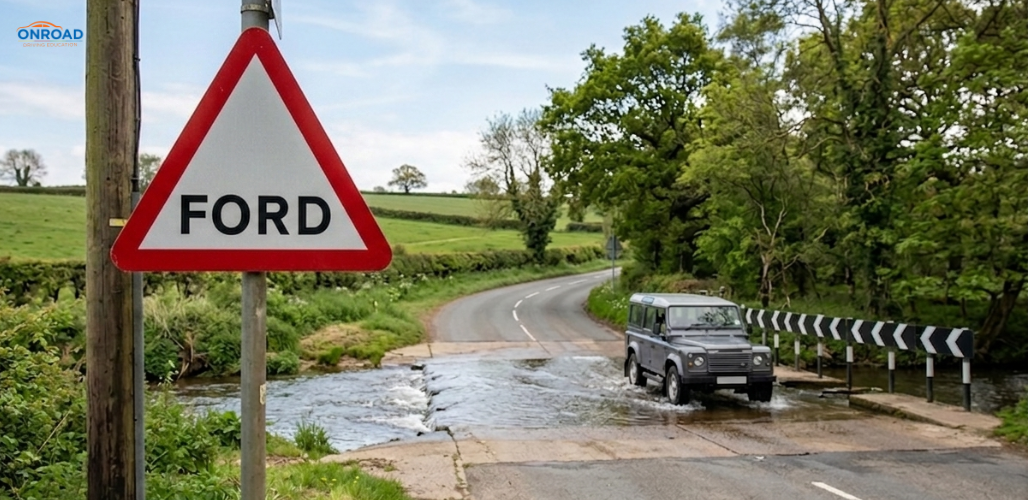
So, what exactly is a Ford, and why does it need a warning sign? A ford is a section of road that passes directly through a body of water. Still not sure what it means? Well, imagine you’re on a road, and a part of it dips into a shallow stream. Since the water is shallow, just ankle-deep, wouldn’t you want to just cross over it instead of building a bridge? A ford is the same concept, but for cars instead of people. It’s basically just a shallow water crossing where the road continues through the water, connecting both sides.
However, fords also have their own share of risks. While fords are usually shallow, the depth of water and road conditions can change quickly depending on weather, rainfall, and water flow. So, what may be a safe crossing one day can easily become a risky endeavour the next day.
What Does the “FORD” Sign Look Like?
If you’ve never seen a ‘Ford’ warning sign, you’d be wondering what it looks like, how it’s depicted. But it’s quite simply depicted and easy to recognise. It may appear as:
In some locations, it may also have some additional signs, such as a flood warning, depth markers displaying water levels, or advisory signs indicating when it is unsafe to cross. These signs warn drivers of the upcoming fords and help them judge their depth and safety risks, so that they can make informed decisions when entering the water.
What To Do When You See a “FORD” Sign
Suppose you see a Ford sign, what should you do? Let’s find out:
Slow Down and Approach Carefully
When you notice a Ford sign, remember to slow down. Reduce your speed gradually as you approach the crossing so you get more time to assess the situation and react accordingly.
Check the Water Level
Usually, Ford signs have depth markers that note the water level, so look for these markers when you approach. But along with these markers, you should also look for visible clues like speed, direction, and level of water flow. If the water looks deep or fast-moving, it is best not to attempt crossing.
Avoid Deep or Fast Water
Most people mistake shallow waters as safe and manageable. However, these waters can also be dangerous if they have strong currents. These currents can push vehicles off the road, and deeper water can damage the engine or cause it to stall. If the water level is too deep or if you think the water is too fast-moving, avoid crossing if possible.
Drive Slowly and Steadily
Once you confirm that it’s safe to cross the ford, don’t be hasty. Drive through the water slowly and smoothly without any sudden movements. Sudden acceleration or braking can make you lose control of the vehicle.
Many reputed Sydney driving schools and training programs, like the Safer Drivers Course, put special emphasis on Fords and similar, less common road signs to ensure their students are aware of all hazards and well-prepared to tackle them.
Why the “FORD” Sign Matters
If you think driving through a Ford is easy and safe, you’ve got another thing coming! Water crossings can be unpredictable and risky, especially after rain. The Fords you thought had shallow water levels may get filled, leading to a rise in water levels. Or you may underestimate the depth or the strength of flowing water.
If you lose control of your vehicle while crossing a Ford, it can have severe consequences, like stalling, losing traction, or getting swept away in the strong currents. A ‘FORD’ sign acts as a warning, alerting the drivers to the dangers ahead and cautioning them to slow down and assess the situation to stay safe. This is why recognising and responding correctly to a ‘FORD’ sign is essential for safe driving.
When in Doubt, Stay Out
Warning road signs are meant to alert drivers of potential dangers ahead, and that’s exactly what the ‘FORD’ sign does. It clearly tells the driver that there’s water ahead on the road, reminding them to slow down, approach gradually, check the Ford for potential dangers, and prioritise their own safety when crossing. And if you are still unsure, the safest choice is simple: do not drive through.
Whether you are learning through a Sydney Driving School or taking training through government-accredited programs like the Safer Drivers Course, being cautious around water crossings can prevent serious accidents. At Onroad Driving School, we ensure our learners understand that they cannot predict every road condition. Staying alert and observant on the road and recognising road signs, even less common ones like the Ford sign, is essential to staying safe and becoming a skilled and responsible driver.
Frequently Asked Questions
1. What does a “FORD” sign mean on the road?
A: It warns drivers that the road crosses through water, such as a stream or shallow river.
2. Is it safe to drive through a ford?
A: Only if the water is shallow, calm, and clearly visible. If unsure, it is safer not to cross.
3. What happens if a car drives through deep water?
A: The vehicle can stall, lose control, or be swept away by strong currents.
4. Are ford crossings common in Sydney?
A: They are less common in city areas but may appear in rural or outer suburban regions.
5. How can drivers prepare for situations like this?
A: Training through a driving lesson or Safer Drivers Course helps drivers build awareness and make safer decisions in unusual road conditions.