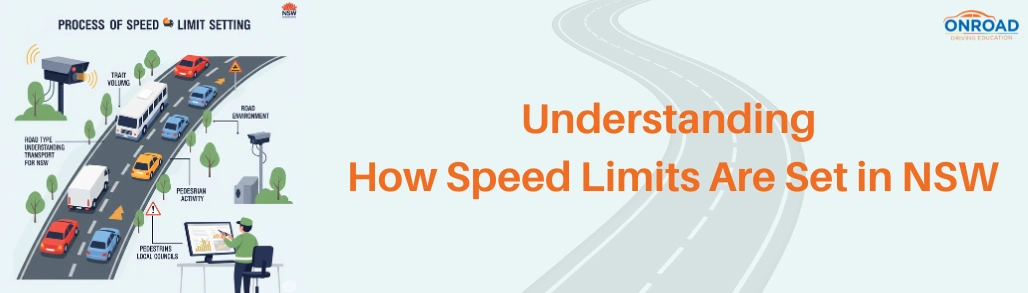
Speed management is one aspect of driving that has a significant impact on road safety and traffic management. Speeding is one of the leading causes of road fatalities in NSW, and the most emphasised lesson in driving school. Speed limits are established to minimise the risk of accidents. They allow you to respond to potential threats or hazards on the road safely. But who sets these speed limits in NSW? And how do they know which speed is safe for which road? Setting the speed limits is way more complex than crunching numbers. It involves detailed analysis and careful consideration of several factors that affect traffic and road safety. Speed limits are finalised after understanding the requirement and weighing all the pros and cons. This post explores the need for speed limits and the various factors that influence speed limits and help ensure the safety and well-being of all road users.
Factors Influencing Speed Limits
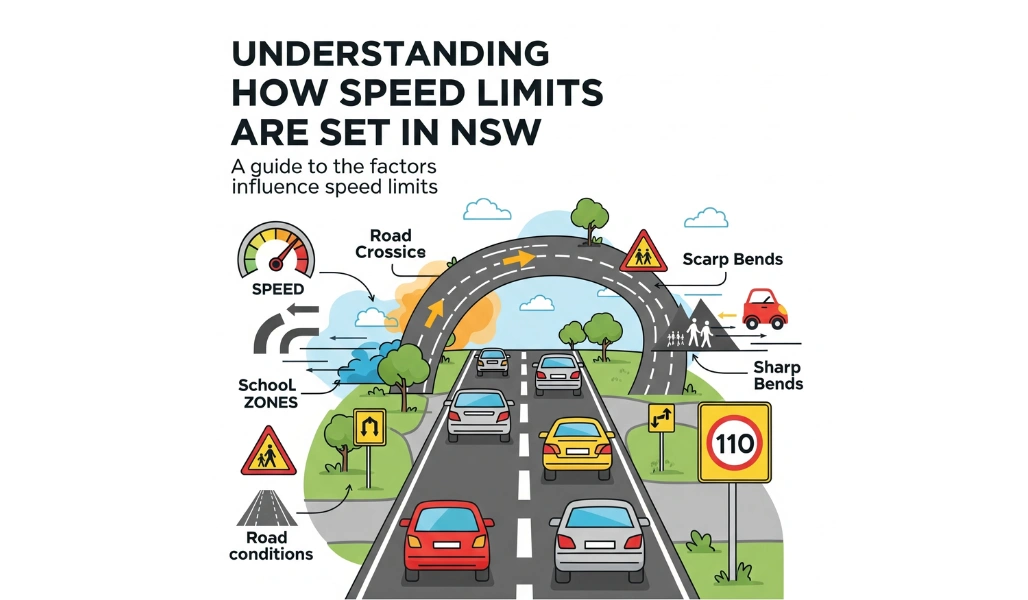
In NSW, speed limits are determined by the government agency Transport for NSW (TfNSW), and the NSW Police is responsible for enforcing these limits. Speed limits are decided based on road and traffic conditions, pedestrian activity, traffic flow, potential hazards, and crash history. But many other factors affect how speed limits are determined for a road in NSW. Let’s look at these factors in brief:
Community Feedback
Local communities do have a say in the speed limit decisions. They are the ones living in the areas surrounding the road. And they’re also the ones who’ll be using the road the most. So, it’s obvious that they’ll have more insight into traffic and road conditions of the area, local crash history, and local concerns and experiences. Taking their feedback can help define the potential risks and set the speed limits accordingly.
Types of Vehicles and Road Users
Different vehicles have different stopping distances. Larger vehicles like trucks need more time to stop or execute other manoeuvres compared to smaller vehicles like cars or motorcycles. Plus, vulnerable road users like cyclists and pedestrians also use the roads alongside cars and trucks. That’s why the types of road users and vehicles have a big influence on the decision of the speed limit.
Potential Risks
Before setting the speed limit, it is essential to know the potential risks associated with that road. Traffic conditions and potential risks faced by different road users are assessed carefully. This helps reduce the risk of hazards and improve road safety considerably. Driving schools also focus on teaching drivers to identify and respond appropriately to potential hazards in various programs like the Safer Driver Course.
Road Infrastructure and Surrounding Environment
Infrastructure is at the core of the decision on speed limits. A well-made road can have a bigger speed limit, but if the road is unpaved, uneven, or in deteriorating conditions, the speed limit is also low. So, the design, condition, and location of the road also influence the choice of speed limits.
Livability and Economic Success
Speed limits aim to support community well-being and local economic vitality. Speed limits are set to help prevent accidents and maintain road safety. That’s why they are decided upon after careful consideration of the local economy and community. When deciding on speed limits, it is important to ensure they support community well-being and boost local economic vitality instead of hurting it.
Conclusion
Speed limits are set to maintain the balance between road safety and traffic flow. They are not kept to deter drivers, but instead to assist them in keeping pace with the local conditions. Following the speed limits and maintaining a safe distance is the duty of all road users. Whether you’re a newbie taking your first driving lessons in a driving school or a seasoned driver refreshing your skills with a Safer Drivers course, learning about speed limits can help you grow and improve your driving abilities. If you want to understand more about speed limits in NSW or learn proper vehicle control and speed management, you can join a good driving school like Onroad Driving Education. By following the speed limits and driving responsibly, we can all contribute to safer roads and a better driving experience in NSW.
FAQs
Q: Why are speed limits important?
A: Speed limits are set to maintain the balance between road safety and traffic flow. They help minimise the risk of accidents and allow you to respond to potential threats or hazards on the road safely.
Q: How are speed limits set in NSW?
A: Speed limits are decided based on road and traffic conditions, pedestrian activity, traffic flow, potential hazards, and crash history.
Q: Who Sets the Speed Limits?
A: In NSW, Speed limits are determined by the government agency Transport for NSW (TfNSW), and the NSW Police is responsible for enforcing these limits.
Q: Which factors influence speed limits?
A: Many factors affect how speed limits are determined for a road in NSW. These include community feedback, potential risks, types of road and vehicles, road infrastructure and surrounding environment, and livability and economic success.