What This Article Covers
Two seconds can mean 33 metres of road at 60 km/h. This article explains how distraction affects drivers, why learners are vulnerable, and practical ways to stay focused.
Two Seconds Is Longer Than You Think
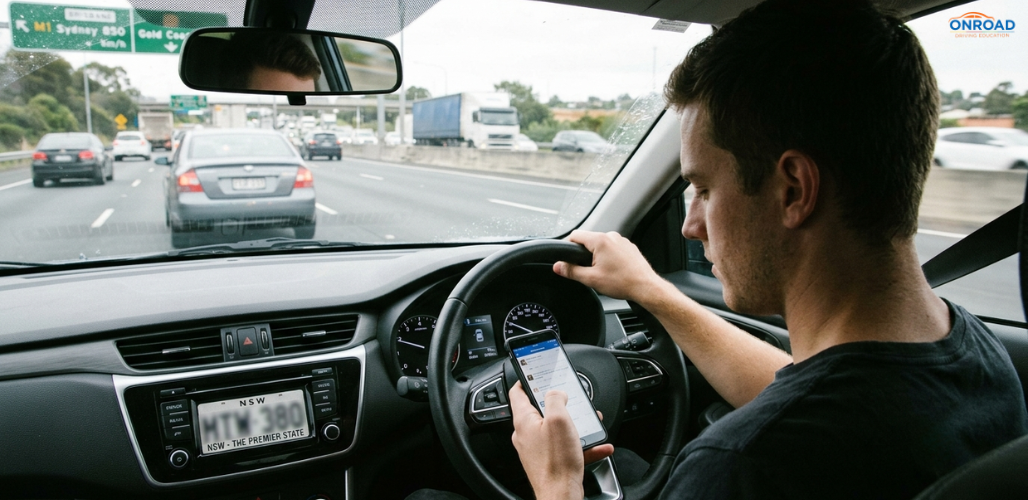
How long is two seconds? Not very long, right? Barely enough time to glance at a notification, change a song, or turn around to answer a passenger. But when you're driving, at 60 km/h, it's enough time to travel roughly the length of seven cars placed nose-to-tail on the road. So if your eyes leave the road for just two seconds, you’re not just missing a moment. You’re missing almost 33 meters of the road without knowing what’s happening around you. You might run a sign, encounter a pedestrian, or even get into a crash. NSW road safety guidance also warns that taking your eyes off the road for more than two seconds can double your risk of a crash. That's why distracted driving in Australia is such an important road safety issue. The problem isn't only what you're looking at. It's everything you might miss while your attention is somewhere else. In this blog, we’ll learn how distraction affects drivers, why learners are vulnerable, and what practical ways Sydney driving school teach learners to stay focused.
What Can Happen in Two Seconds?
A lot can happen in a few seconds. Road conditions can be very unpredictable. You might be fully focused on the road, but you look away for just a couple of seconds, and a vehicle pulls out from a side street, or the traffic suddenly slows, or someone makes an unexpected move, forcing you to react quickly. And it’s not an exaggeration. Imagine you're driving along a familiar suburban road and glance down to change a song. When you look back up, the car ahead has started braking. Or perhaps you're approaching an intersection and turn your attention towards a passenger for a moment. A pedestrian has stepped closer to the crossing, or a cyclist has moved into your path. That’s how fast the road conditions can change, forcing you to have quick reflexes and even quicker decision-making. This is how distraction affects driving. You don't necessarily need to be distracted for a long time to miss something important. Even a short break in your attention can cost you valuable time to see, understand, and respond to a developing hazard.
Distraction Isn't Just Looking at Your Phone
The words driver distraction often bring mobile phones to mind. Phones are certainly a major concern, but they're not the only source of distraction. Distraction can be of three types: visual, physical, and mental. Visual distractions include looking at your phone, navigation screen, or something happening inside the car. Physical distractions include reaching for a drink, adjusting the radio, or picking something up from the passenger seat. Mental distractions are becoming absorbed in a conversation, an argument, or something worrying you while you're driving. And a distraction can be either of these or a combination of one or more types, too. For example, mobile phone distraction while driving can take your eyes away from the road, your hands away from the wheel, and your mind away from the driving task at the same time. That's a dangerous combination.
Make Distractions Harder to Reach
The easiest way to deal with distraction is often to prevent it before you start moving. If you're wondering how to avoid distractions while driving, start before the engine is running. Put your phone somewhere you can't easily reach it, set your navigation, choose your music, and adjust the mirrors and climate controls. If something needs your attention once you're driving, find a safe and legal place to stop first. Passengers also have a role to play. A friend making jokes or having an animated conversation might not seem dangerous, but if you're struggling to concentrate, it's okay to ask them to give you a moment to focus.
This is why defensive driving techniques are worth taking seriously for learners. Good habits are much easier to build while you're learning than to correct after years of driving. A good driving lesson isn't only about steering, parking, or preparing for the test. It should also help learners understand where their attention needs to be and how to stay focused when the road becomes more demanding.
Defensive Driving Gives You More Time
Defensive driving isn't about driving cautiously, expecting something to go wrong at any moment. It's about giving yourself enough time and space to deal with unexpected hazards. You can spot a hazard or a problem developing if you look further ahead, scan for hazards, and maintain a safe following distance. If something does change suddenly, you're more likely to have time to respond calmly. This is one reason the Safer Drivers Course can be valuable for eligible learners. It helps you improve your concentration, hazard perception, and decision-making skills, and prevent risks that can develop when attention is divided. A professional driving school can reinforce those habits during practical training too. For learners in Sydney, a Sydney Driving School can help build good observation and decision-making habits while they're gaining experience on real roads.
Don't Give Away Those Two Seconds
At 60 km/h, two seconds is about 33 metres. That's a lot of road to travel without giving your full attention to what is happening ahead. You don't need to wait until you're an experienced driver to take driver distraction seriously. Make it a habit from your next driving lesson: set everything up before you move, keep your attention on the road, and pull over safely when something needs your attention.
If you're looking for a Driving School Sydney learners can turn to for practical guidance, Onroad Driving School can help you build the skills that matter beyond test day. Our driving lessons focus on developing safer habits, stronger hazard awareness, and the confidence to make good decisions when the road doesn't go exactly as expected.
Don't leave distraction management until after you get your licence. Build the habit now, practise it consistently, and give yourself the best possible chance of getting home safely on every drive.
Frequently Asked Questions
Q1. How long can you take your eyes off the road while driving?
A: There isn't a safe amount of time to deliberately look away from the road. NSW road safety guidance warns that taking your eyes off the road for more than two seconds can double your crash risk.
Q2. How far do you travel in two seconds at 60 km/h?
A: At 60 km/h, you travel about 33 metres in two seconds. That's a significant distance to cover without properly watching what's happening ahead.
Q3. What are the most common driving distractions?
A: Common distractions include using a mobile phone, talking to passengers, adjusting the radio or navigation, eating, drinking, and looking for something inside the car. Your thoughts can also become a distraction if you're focused on something other than driving.
Q4. Why is distracted driving dangerous for learner drivers?
A: Learners are still developing their observation, hazard perception, and decision-making skills. A distraction can make it harder to notice hazards and respond safely while these skills are still developing.
Q5. How can I avoid distractions while driving?
A: Prepare before you leave. Put your phone somewhere you can't easily reach it, set your navigation, and adjust your mirrors and controls before moving. If something needs your attention during the drive, pull over somewhere safe before dealing with it.
Q6. Does the Safer Drivers Course cover driver distraction?
A: The Safer Drivers Course helps eligible learner drivers develop skills such as hazard perception, safer decision-making, and understanding how risks develop on the road. These skills can help learners recognise and manage situations where distractions could affect their driving.