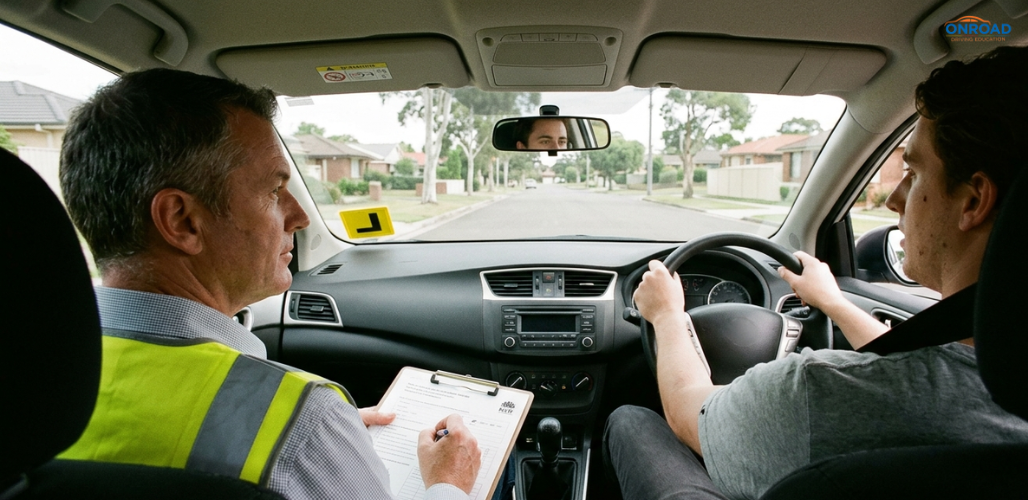
What This Article Covers
In this article, we explore what NSW driving test examiners actually look for when they assess your driving. We expand on the skills they look for, common instant fails, and how you can come across as a safe, independent driver.
The Biggest Driving Test Myth
When you go for your driving test exam, what do you think the examiner will assess? Ask this of most learners, and they’ll say checking your prowess in steering, parking, and following directions. And that’s understandable. After all, that’s what they’ve been practising for months! As a learner, you might be worrying about your skills in reverse parking, three-point turns, merging lanes, and whether you'll remember every road rule under pressure. However, that’s not what examiners are actually looking for. When an examiner is taking your test, they’re really asking themselves whether you’re ready to drive alone safely and responsibly. And that question shapes their assessment and everything that happens during your test. Whether you're taking a driving lesson with a Sydney Driving School or preparing independently, understanding this mindset can completely change how you approach your test.
The Real Goal: Safe, Independent Driving
Why do you think even good drivers sometimes fail the test? They try to show their driving skills and come across as perfect drivers to impress the examiner. In this attempt to drive exactly as they think the examiner wants. Ironically, this often creates more nerves and more mistakes.
So what should you do instead? Stop trying to be flawless. Examiners aren't expecting you to be perfect drivers. They just want proof that you can make safe decisions independently without anyone instructing you on what to do. Why? Because once you get your license, you won’t have an instructor, parent, or examiner to help you make quick decisions. You’ll need to recognise hazards, judge gaps in traffic, manage your speed, and react appropriately, all on your own. And examiners are there to assess whether you can do that independently or not.
Observation Is Everything
More than anything else, examiners will check if you’re aware and observant as a driver. For example, you’d think the examiner will watch your hands on the steering wheel, but in reality, they’ll be paying more attention to your eyes and head movements. They want to see you checking your mirrors regularly, scanning the road ahead, keeping an eye out for pedestrians, cyclists, and hazards, and performing clear blind-spot checks. They want to know you’re observant and stay aware of your surroundings throughout, not only when changing lanes or parking. The stronger your observation habits are, the more the examiner will believe you’re actively thinking about safety rather than simply controlling the vehicle.
Good Drivers Make Good Decisions
A critical part of safe driving is timely decision-making. From choosing a safe gap when turning or judging when it’s safe to merge to giving way correctly without hesitating, there are a lot of decisions drivers make regularly. And you’ll have to make these decisions constantly during the test, too. Examiners check whether you can evaluate traffic conditions and make calm, sensible choices under pressure. So, a good learner driver who consistently makes safer decisions will almost always perform better in the test. This is why two equally skilled drivers may still receive different results in the tests.
Speed Management Shows Maturity
If you think speed management is all about staying below the speed limit, think again. Following the speed limit is important, but that’s not all speed management involves. It’s also about adjusting your speed to match the conditions around you. Examiners will check if you adjust your speed in heavy traffic, slow down near schools, and drive cautiously through construction zones, and adjust speed around narrow residential streets. Good drivers understand that safe driving requires adapting to the environment, not just watching the speedometer.
Road Positioning Reveals Confidence
Where you place your vehicle tells the examiner a lot about your awareness and confidence. If you want to show good road positioning, you should stay centred in your lane, maintain a safe following distance, get in the correct position for turns, and leave enough space around your vehicle. These habits help prevent hazards before they develop. Many driving test errors occur because your focus is on what's directly in front of you instead of being aware of the space around your vehicle.
Smooth Vehicle Control Still Matters
All these things don’t mean that your driving skills can take a backseat. Vehicle control and smooth driving manoeuvres are still important. Examiners will also check how smoothly you’re steering, braking, accelerating, and using indicators. If you perform a slightly imperfect move, it won’t matter as much as a risky move performed with confidence. Examiners want to see consistency and predictability instead of sudden and surprising moods.
The Instant Fails That End Tests Immediately
While examiners understand that learners may make small mistakes, some errors are considered too serious to overlook. Such errors may fail you on the test instantly. Common instant fail mistakes include:
-
Exceeding the speed limit
-
Failing to stop completely at a stop sign or red light
-
Failing to give way
-
Causing another road user to brake or swerve
-
Mounting the kerb
These actions indicate a level of risk that suggests the driver is not yet ready for independent driving. That's why even an otherwise strong test can end immediately if one of these serious mistakes occurs.
The Secret Most Successful Learners Understand
So, how can you ensure you pass the test? You understand what the test is really measuring and excel in that field. Along with driving and vehicle control skills, you should also focus on awareness, observation, judgment, consistency and safety. Programs like the Safer Drivers Course focus on teaching drivers how to make quick and correct decisions in real-world challenges, which helps reinforce these habits. The more you think like a safe driver, the more naturally you'll demonstrate the behaviours examiners want to see.
Final Thoughts: Drive Like You're Already Licensed
If you're preparing for your driving test, stop trying to impress the examiner. Instead, prepare yourself in a way that shows you’re ready to drive safely on your own. That's the real purpose of the test. Whether you're preparing with driving lessons from family or friends, taking a mock test, or learning from a professional Sydney Driving School instructor, focusing on safety and decision-making will always serve you better than chasing perfection.
At Onroad Driving School, we help learners build the confidence, awareness, and practical skills needed not just to pass the test, but to become safe and capable drivers for life. Book a driving lesson with our experienced instructors and learn what examiners are really looking for before test day.
Frequently Asked Questions
Q1. What are driving examiners mainly looking for during a driving test?
A: Examiners mainly check whether you can drive safely and independently. They want to see your skills in observation, decision-making, speed management, road positioning, and vehicle control.
Q2. Do I need to drive perfectly to pass my NSW driving test?
A: No, you don’t need to be perfect. Examiners understand that learners may make minor mistakes. They are looking for safe, consistent driving rather than perfection.
Q3. Why are blind spot checks so important in a driving test?
A: Blind spot checks are a critical safety habit that shows how aware you are of your surroundings. Missing them can result in lost marks or a failed test.
Q4. What are some common instant fail mistakes?
A: Common instant fail mistakes include speeding, failing to stop at a stop sign or red light, failing to give way, causing another driver to take evasive action, or mounting the kerb.
Q5. How can I improve my chances of passing the driving test?
A: You can improve your chances of passing the test by focusing on developing strong observation habits, making safe decisions, managing speed appropriately, and practising with a qualified driving instructor before your test.