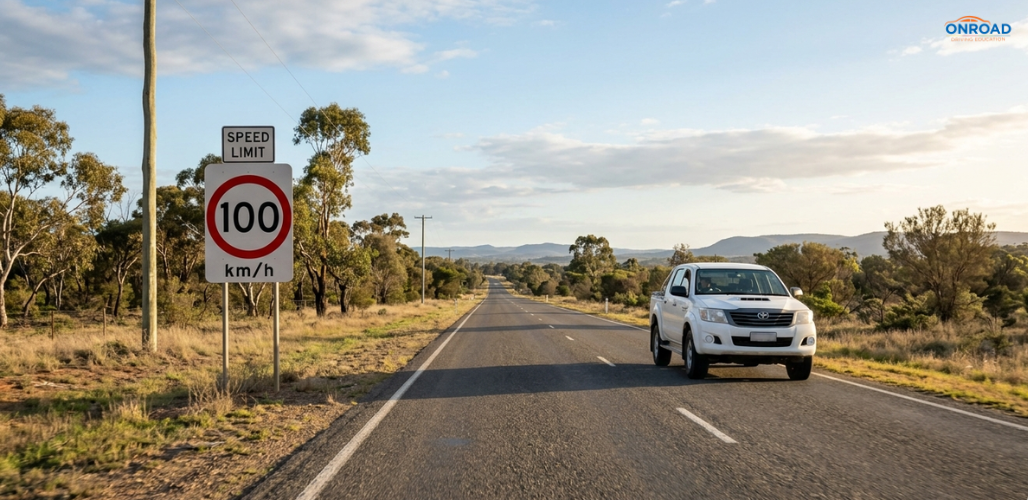
In Australia, we have various speed limits depending on the type of road and level of pedestrian activity. The maximum legal speed a car can travel at is 130km/hour, which exists in a section of a highway in the Northern Territory.
Speed is the number one killer on Australian roads. Most drivers believe the speed limit is the recommended speed to drive, but in fact, the speed limit refers to the maximum speed a car can legally drive on that section of the road. Speeding not only increases the risk of the crash but also the severity of the outcome.
The car’s ability to stop varies on the speed they are travelling. Find below a table showing the time it takes for the car to stop – if the brakes have been used correctly – to come to a complete halt.
|
Speed
|
Total Braking Distance
|
|
50km/hour
|
41m
|
|
60km/hour
|
54m
|
|
80km/hour
|
85m
|
|
100km/hour
|
122m
|
Default speed limits in areas that don’t have a speed limit sign. In built-up areas, the default speed limit is 50km/hour and 100km/hour for all other roads. Below are state-wise varied speed limits, which are important to know.
| State / Territory |
Default Urban/Residential Limit |
Default Country/Rural Road Limit |
Maximum Highway/Freeway Limit |
| New South Wales (NSW) |
50 km/h |
100 km/h |
110 km/h |
| Victoria (VIC) |
50 km/h |
100 km/h |
110 km/h |
| Queensland (QLD) |
50 km/h |
100 km/h |
110 km/h |
| Western Australia (WA) |
50 km/h |
110 km/h |
110 km/h |
| South Australia (SA) |
50 km/h |
100 km/h |
110 km/h |
| Northern Territory (NT) |
60 km/h |
110 km/h |
130 km/h |
| ACT & Tasmania |
50 km/h |
100 km/h |
110 km/h |
10km/hour
This is indicated in a shared zone, where it is expected that pedestrians and cars will have to share the space. These are often found in car parks or driveways. In this scenario, the driver is expected to give way to the pedestrian.
40km/hour
This speed limit is associated with the school zone. There will be a ‘School zone’ sign and an ‘End school zone’ sign to indicate the area this speed limit applies to. It also is the speed cars need to travel at when roadwork is happening.
Advisory Speed Limits
Often before turning a corner, there will be a road sign that indicates the speed that will allow the driver to safely turn at the upcoming corner. These vary on the arc of the corner itself. Once the driver sees this sign, they should slow down to the indicated speed limit to prepare to go around the bend. Some roads can also have varied speed limits depending on the weather, for example, 100km/hour but 90km/hour when wet.
Being aware of speed limits is crucial in practising safe driving. Changing our perception of what speed limits mean, can be one of the solutions to reducing the annual accident toll that currently exists.
FAQS
1. What is the highest speed limit in Australia and where is it?
The highest legal speed limit in Australia is 130 km/h. This limit is strictly found on designated sections of major rural highways in the Northern Territory (NT), such as parts of the Stuart Highway. In all other states and territories, the maximum speed limit on freeways and highways is capped at 110 km/h.
2. What is the default speed limit in a residential area in Australia?
In most Australian states and territories (including NSW, VIC, QLD, WA, and SA), the default speed limit for residential or built-up areas is 50 km/h, unless signposted otherwise. The only exception is the Northern Territory (NT), where the default urban speed limit is 60 km/h.
3. What is the legal speed limit in an unmarked car park in Australia?
If a car park does not display any speed limit signs, you are legally required to drive at a safe, controlled speed that allows you to stop instantly to avoid pedestrians or reversing vehicles. While many private shopping centres signpost shared zones at 10 km/h or 20 km/h, you must always exercise extreme caution and maintain a low speed in any unmarked parking area.
4. What is the default speed limit on an unmarked country road?
When driving on an unmarked country or rural road, the default limits vary across borders:
100 km/h: In New South Wales, Victoria, Queensland, South Australia, and Tasmania.
110 km/h: In Western Australia and the Northern Territory.
Regardless of the legal maximum, you should always reduce your speed on unsealed, winding, or gravel country tracks for safety.
5. Can Learner (L) and Provisional (P) platers drive 110 km/h on the highway?
This strictly depends on the state where your licence was issued and where you are driving:
NSW: L-platers and Red P1 drivers are legally restricted to a maximum of 90 km/h, while Green P2 drivers are capped at 100 km/h, even on a 110 km/h highway.
WA: Learner drivers are legally capped at a maximum of 100 km/h.
VIC & QLD: There are no special speed caps for L or P plate drivers. You are permitted to drive up to the maximum signposted speed limit (e.g., 110 km/h) if conditions are safe.