What This Article Covers
Did you know that a crash at 40 km/h without wearing a seatbelt can be just as deadly as a crash at higher speeds? This article explains the risks of a crash at 40 km/h, why wearing a seatbelt reduces risk, and why most Sydney driving schools emphasise wearing a seatbelt and other safety habits from day one.
Seatbelts: The First Step to Safer Driving
Are you among those who believe that low speeds mean low chance of crashes, so not wearing a seatbelt is okay? You’re not right. But you’re also not alone in thinking so. Many drivers assume that serious crashes only happen at high speeds. However, the truth is that even at 40 km/h, which is the school zone speed in Australia, a crash can be just as deadly. The forces involved in a collision at 40 km/h can be severe enough to cause life-changing injuries. And a seatbelt can prevent you and other passengers from getting hurt in such crashes. That is why seatbelts remain one of the most important safety features in any vehicle and the most emphasised safety habits in most Sydney driving school. Experienced drivers might think this is a normal routine habit, but in a crash, that simple action can make the difference between walking away and suffering serious injury. Understanding what really happens in a crash and how buckling up keeps you safe can help drivers realise why it matters on every short or long trip.
What Happens in a Crash at 40 km/h?
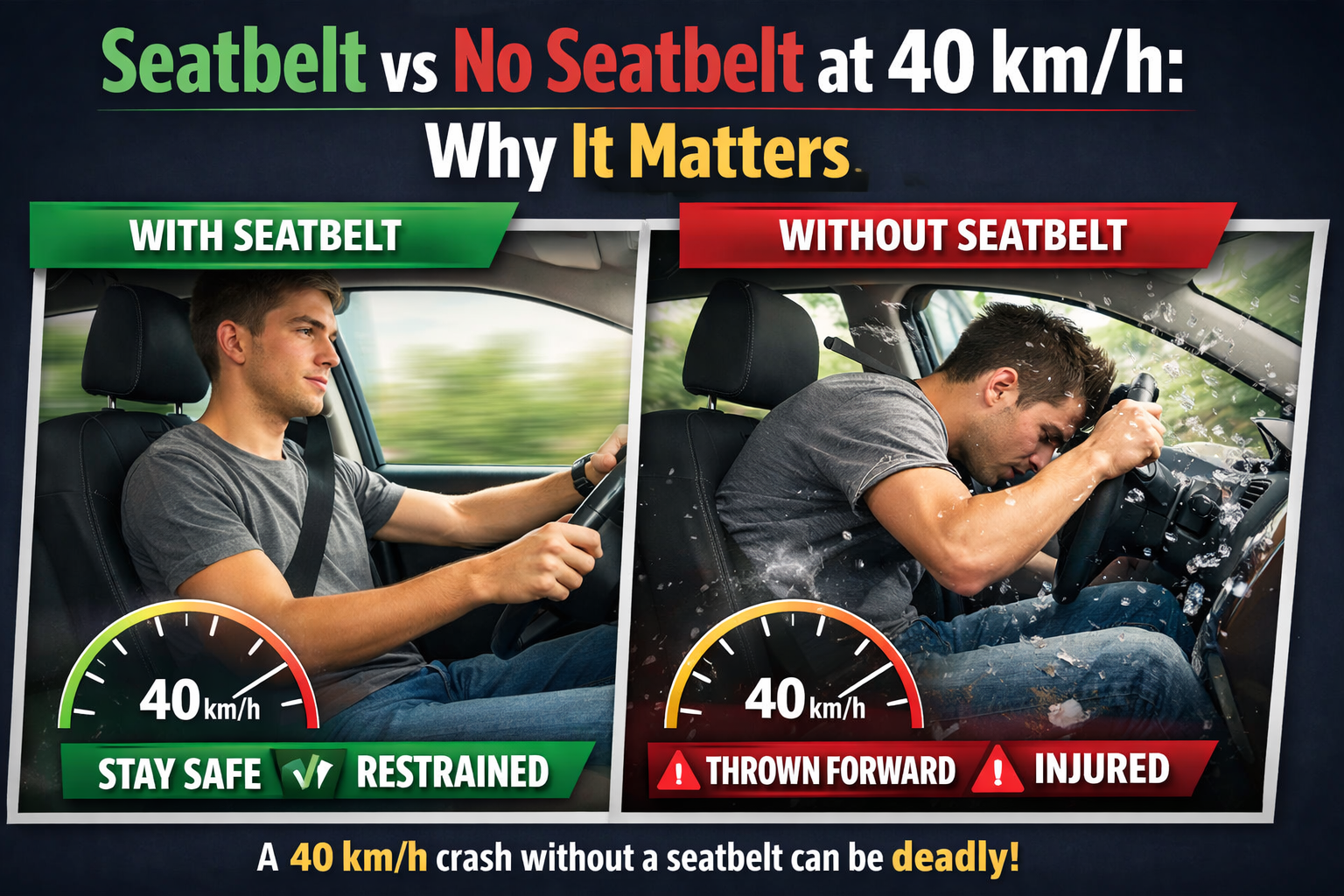
Do you know what actually happens when a vehicle travelling at 40 km/h suddenly stops or crashes into another vehicle? While the car stops instantly, everything inside it, including you and the passengers, keeps moving at the same speed. So, if you’re wearing a seatbelt, it restrains your body and slows you down safely in the car. It spreads the force or momentum of the crash across the stronger parts of the body, such as the chest and pelvis, slowing you down and reducing chances of serious injury. However, if you’re not wearing a seatbelt, there’s nothing to stop your body from moving forward. So, you may end up hitting the steering wheel, dashboard, or windscreen. In severe cases, you might even be thrown from the vehicle. Even at suburban speeds, the forces involved in a sudden stop can be extremely dangerous.
Key Differences Between Wearing and Not Wearing a Seatbelt
If you’re still not clear how dangerous it is to avoid a seatbelt when driving at low speeds, let’s see what the main differences are between wearing and not wearing a seatbelt while driving:
1.Injury Risk
When you’re not wearing a seatbelt, there’s a chance that you’ll be forcefully thrown forward with the momentum of the crash. This increases the risk of severe injuries. But if you’re wearing a seatbelt, it keeps you in your seat and thus significantly reduces the chances of you getting hurt.
2.Body Movement
In a crash, the force can push you or your passengers out of the seat. However, a seatbelt keeps your body in the proper position in the seat during a crash, preventing unnecessary body movement that can increase the risk of injuries.
3.Driver Control
A driver restrained by a seatbelt is more likely to remain seated and maintain some control of the vehicle during sudden braking or impact. So, if the driver does not wear the seatbelt, they may lose control completely during a crash.
4.Ejection Risk
Seatbelts are designed to prevent drivers and passengers from being thrown out of the vehicle. So, if you don’t wear them, the risk of ejection increases significantly and may lead to fatalities.
These differences are why wearing a seatbelt is one of the most effective ways to reduce injury in a crash.
The Real Impact of a 40 km/h Collision
But if the speed is low, why is the risk of injury still high? Safety experts state that hitting something at 40 km/h without wearing a seatbelt would feel a lot like falling headfirst from a second-storey building. Why? Because it’s not just the speed alone that can hurt you. The sudden stopping of the vehicle would put force on the human body, which continues moving forward despite the vehicle becoming stationary. It is this force, combined with the speed, that can hurt the body on impact.
This is why you should always wear seatbelts, even for short drives in the local areas and low-speed zones. Reputed Sydney driving schools focus heavily on teaching learners to always wear seatbelts because habits formed early tend to last for life. Even programs like the Safer Drivers Course teach young drivers to always buckle up before driving, not just to pass the driving test, but as a safe driving habit.
The Bottom Line: Buckle Up Every Time
Seatbelts save lives. Even at speeds as low as 40 km/h, they can dramatically reduce the risk of serious injury in a crash. So, you should always buckle up before every trip, no matter how short or long it is. Safe driving starts with simple choices, and wearing a seatbelt is one of the most important. Learning these habits through proper driver training at a trusted Sydney Driving School helps ensure drivers stay safe long after their driving lesson ends.
Wanna learn how to drive safely and skilfully? Join Onroad Driving School, one of the most trusted driving schools in Sydney, today and become a confident and responsible driver.
Frequently Asked Questions
Q1. Is it dangerous to drive without a seatbelt at low speeds?
A: Yes. Even at 40 km/h, the force of a crash can cause severe injury if you are not wearing a seatbelt.
Q2. Can a seatbelt really prevent serious injuries?
A: Yes. Seatbelts help restrain the body and reduce the risk of hitting the dashboard, windscreen, or being ejected from the vehicle.
Q3. Why do driving schools emphasise seatbelt use so much?
A: Forming a habit of wearing the seatbelt from early on ensures drivers always buckle up automatically, improving safety for every journey.
Q4. Is wearing a seatbelt compulsory in NSW?
A: Yes. In NSW, drivers and passengers must wear seatbelts unless they have a valid exemption.
Q5. What is the safest way to wear a seatbelt?
A: The belt should sit firmly across the chest and lap, not twisted or loose, and should be worn for the entire journey.