What’s in This Article
This article examines the sharp rise in New South Wales road fatalities and the growing concern among safety experts regarding the current measures. You’ll learn why the NSW road toll has exceeded 350 lives, how this figure compares to government safety targets, and why organisations like the NRMA are questioning the effectiveness of speed cameras and blanket speed limit reductions.
Intro
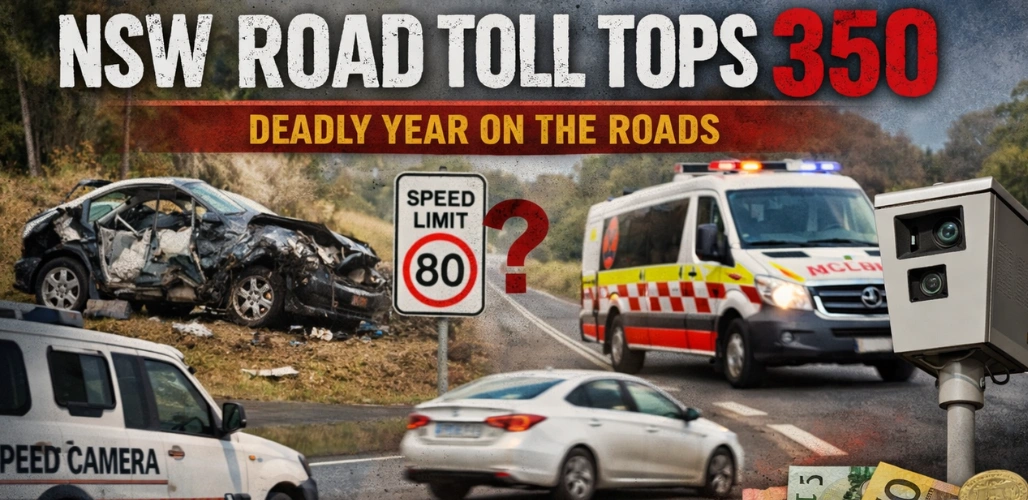
When 2025 began, Transport for NSW set a goal to reduce the road toll to 255 - a 50% reduction. However, 2025 has come to an end, yet that goal remains beyond reach. In fact, in 2025, NSW recorded its deadliest year on the roads since the COVID period, with the road toll surpassing 350 lives lost. According to official Transport for NSW data, this road toll is a staggering 97 deaths more than its intended target. But these numbers are not mere statistics. They’re a stark reminder of how devastating a single fatality can be for all the family and community people involved. This alarming rise has become a cause for concern, making us question whether current road safety strategies and educational programs, like the Safer Drivers Course, are genuinely making roads safer. Organisations like the NRMA are questioning the effectiveness of speed cameras and speed limit reductions. However, industry experts believe we need to look beyond the surface to understand what’s actually causing these road deaths.
“Easy Fixes” Under Scrutiny
The NRMA believes relying too much on speed cameras and speed limit cuts cannot solve bigger issues. It also warns that such overreliance might be an easy fix that provides just the appearance of action without delivering meaningful long-term safety benefits. While these strategies are preferred for their easy implementation and high visibility, many believe they don’t address the complexity of severe collisions.
Speed is undeniably a factor in road trauma. But many other equally dangerous behaviours and conditions are often overlooked when enforcing some traffic rules. This may include driver fatigue, aggressive driving, distracted driving, etc. While road safety authorities try to slow traffic, the real change is needed in improving driver awareness, road design, or fatigue management. Without these changes, any stringent strategy would be just an easy and surface-level fix that doesn’t address underlying issues.
The Bigger Picture Behind Road Fatalities
Ask any road safety specialist, and they’ll tell you speed isn’t always the only reason for fatal crashes. Often, there are multiple contributing factors, including:
-
Driver fatigue, particularly on regional roads
-
Distraction from mobile phones and in-vehicle technology
-
Impairment from alcohol, drugs, or prescription medication
-
Poor road infrastructure and outdated layouts
-
Limited hazard perception and defensive driving skills
In fact, Transport for NSW’s serious injuries report states crashes involving inattention, fatigue, and misjudgement as prominent reasons for fatalities. To deal with these issues, we need more than strict enforcement and compliance. What we need is insightful solutions that address how drivers interact with the road environment. Driving schools and education programs, such as the Safer Drivers Course, focus on hazard perception, decision-making, and low-risk driving strategies, and can play a crucial role in helping drivers understand and follow these laws willingly.
A Call for Smarter, Balanced Solutions
What we need today is not the stubborn disregard of road safety issues. Instead, we need a smarter, more balanced approach to enhancing road safety. This includes:
-
Better designs and more safety-focused road infrastructure
-
Focusing on improving compliance and reducing high-risk behaviours
-
Providing high-quality driver education to all drivers
-
Improving fatigue management strategies
-
Ongoing data-driven evaluation of safety measures
Experts argue that strengthening driver education, especially for learners, P-platers, and returning drivers, is essential. A reputable Sydney Driving School does more than prepare drivers for a test; it helps them understand risk, read the road, and make safer decisions under pressure.
Lives Behind the Numbers
Road safety is an essential part of driving education, and maintaining it is the responsibility of every road user. That’s why bringing sustainable improvements in road safety cannot come from generic solutions. Instead, we must address the problems at the root and come up with evidence-based strategies for improving driving education, infrastructure, and enforcement. Whether you’re a learner in your first driving lesson or a long-time motorist, safer roads depend on informed, attentive, and well-trained drivers. That’s why professional driving programs, like the Safer Drivers Course, are one of the most effective tools for reducing risk and building a safer road culture across NSW.
Are you also a learner looking for a good Sydney driving school? Go for professional driving education with Onroad Driving School and take your first steps to becoming a safe and responsible driver.
Frequently Asked Questions
Q1. Why has the NSW road toll increased so significantly?
A: Experts point to multiple factors, including fatigue, distraction, impairment, road design issues, and gaps in driver education. Speed alone does not explain the rise.
Q2. Are speed cameras ineffective for road safety?
A: Speed cameras can reduce speeding in specific locations, but experts argue they are not sufficient on their own to address the broader causes of serious crashes.
Q3. What alternatives are experts recommending?
A: A balanced approach that includes safer infrastructure, targeted enforcement, and stronger driver education programs is widely supported by road safety specialists.
Q4. How does driver education help reduce road fatalities?
A: Quality education improves hazard perception, decision-making, and awareness. Courses like the Safer Drivers Course help drivers recognise and manage risk before it leads to a crash.
Q5. What role do driving schools play in road safety?
A: A professional driving school prepares drivers for real-world conditions, not just licence tests. Ongoing training supports safer habits across all experience levels.