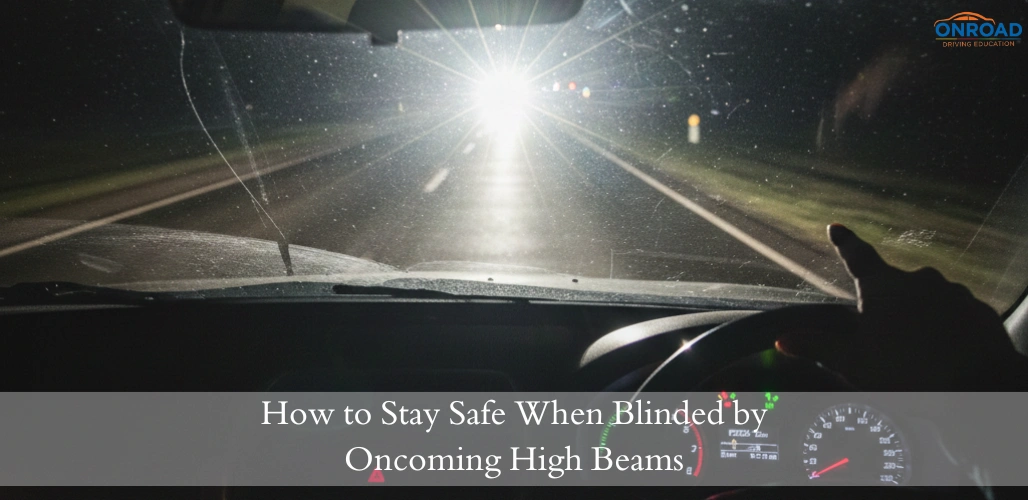
If you’ve never driven at night, you’re probably thinking it’s a calm and predictable, if a bit challenging, experience. But if you have, you’d know how this calm ride can suddenly become chaotic and unpredictable due to high beam glare. Imagine you’re driving steadily one moment, and in the next, you find your vision flooded with the blinding light of an oncoming vehicle. That sudden glare can be disorienting, stressful, and dangerous, especially on dark suburban or country roads. This phenomenon is known as flash blindness or temporary blindness, which impairs your ability to see and react quickly. Knowing how to respond in these moments is a critical skill, and one that every responsible Sydney Driving School teaches to help drivers stay safe and in control.
The Immediate Risk of High Beam Glare
There’s no doubt that such high beam glare is very dangerous for night driving. Such blinding light can overwhelm your eyes, making it difficult and time-consuming to readjust to the darkness around. And in those few seconds of disorientation, you cannot react quickly enough, your depth perception weakens, and your ability to judge distance and lane position also reduces. It is an unsettling and dangerous thing for any driver, especially learners and P-platers with little experience to their name.
So, what to do in such a situation? The key is not to panic. Panicking will only further weaken you. Instead, you should stay calm and try to regain your vision and control as soon as possible. There are clear, proven techniques that help drivers maintain control when vision is temporarily impaired. Let’s discuss them in brief.
The Three Principles of Glare Safety
Professional instructors from reputed Sydney driving schools make it a point to teach safe night driving techniques to their students. Their night safety driving lessons are focused on three simple but powerful principles that can help drivers handle high beam glare effectively. Let’s take a look at these principles:
Look Left – Avoid the Glare
When hit by bright lights, our instinct is to stare. But when driving at night, staring at the oncoming lights only worsens their effect. So, what to do? Instead of staring at it, shift your focus slightly to the left side of the road and use your peripheral vision. Ideally, you should look for the white fog line or the left road edge to maintain your position on the road. This technique prevents the glare from hitting your retinas directly while still allowing you to stay oriented and aware of the road ahead.
Stay Left – Maintain Lane Position
One of the most serious risks associated with flash blindness is the driver steering towards the light, potentially causing a collision. Ever heard of ‘the moth effect’? It happens when a bright light or prominent object captures a driver's focus, causing their brain to draw towards it subconsciously. Due to this effect, your natural steering mechanisms may cause the vehicle to drift towards the object of your attention.
The moth effect is particularly relevant in driving situations at night when oncoming high beams may trick your brain into steering towards it, making it a known safety concern. To avoid this, drivers must consciously keep left within their lane. It prevents them from accidentally drifting into the centre line or oncoming traffic. This is also why most Sydney driving schools emphasise maintaining strong lane discipline, particularly during night driving practice.
Slow Down – Regain Control
Full visibility is one of the fundamental requirements of safe and responsible driving. However, the nighttime road environment doesn’t offer proper visibility, making it a driving risk. Logic says that if you can’t see clearly, you shouldn’t be travelling at speed. What you should do instead is ease off the accelerator gently and give your eyes some much-needed time to readjust. Don’t ever slam the brakes in such situations unless it’s absolutely necessary, as sudden braking can create further risk. However, if you think your visibility is severely affected, the safest choice is to pull over safely and stop until your vision returns. Being in control while driving is essential to safety.
High Beam Etiquette and NSW Road Rules
There are some road etiquette and rules associated with night driving and the responsible use of high beams in NSW. Blinding another driver with your high beams puts everyone on the road at risk and should be avoided. That’s why drivers must dip their high beams when another vehicle is within 200 metres, whether approaching or following. If an oncoming driver cannot see clearly, they may drift out of their lane or react unpredictably. Using high beams responsibly protects not just others, but yourself. Dirt and smudges can also amplify glare, making high beams feel even harsher. So, drivers should also try to keep their windscreen clean, inside and out, to reduce glare and increase their visibility.
How Professional Training Makes a Difference
Knowing these techniques doesn’t guarantee you’ll be able to use them effectively. When under pressure, it’s normal to react instinctively, and often techniques take a back foot when instincts take over. This is where professional driver education plays a crucial role. With programs like the Safer Drivers Course, drivers can learn to make decisions with a calm mind rather than reactive behaviour. They can develop low-risk driving strategies, including hazard awareness and driving safely when blinded by high beams from oncoming traffic.
At Onroad Driving School, we have expert instructors who can teach safe night driving to learners in a controlled and supervised environment. We allow learners to experience glare conditions and respond to them appropriately in safe conditions with an instructor present. Over time, this transforms knowledge into instinct, helping them drive confidently and safely at night and when facing high beams.
Final Thoughts
Keeping the roads safe while night driving is every driver’s responsibility. While it’s not possible to remove all challenges that come with driving at night, being prepared for them can make a significant difference. Whether you’re a learner or an experienced driver, looking to brush up on your skills with a Safer Drivers Course, knowing how to handle oncoming high beams in traffic is an essential skill. Being blinded by high beams is unsettling, but it doesn’t have to be dangerous. Staying calm and following the three principles of glare safety can prevent serious incidents.
If you want to build confidence and master hazard perception after dark, consider booking a session with a trusted Sydney Driving School, like Onroad Driving School, to strengthen your night driving skills in a controlled, professional environment.
FAQs
Q1. What is flash blindness while driving?
A: Flash blindness occurs when bright light, such as oncoming high beams, temporarily reduces your vision. It can take several seconds for your eyes to readjust to darkness.
Q2. Should I flash my headlights if someone doesn’t dip their high beams?
A: Briefly flashing your headlights can alert the other driver, but avoid aggressive or repeated flashing, as it may further distract or confuse them.
Q3. Is it safer to stop if I can’t see clearly at night?
A: Yes. If glare severely affects your vision, safely pulling over and stopping until your eyesight returns is the safest option.
Q4. Are learner drivers allowed to practise night driving in NSW?
A: Yes. Night driving is encouraged as part of learning, especially with supervision from a qualified instructor or through a professional driving lesson.
Q5. How can I reduce glare from oncoming vehicles?
A: Keep your windscreen clean, avoid looking directly at headlights, and ensure your own headlights are properly aligned.