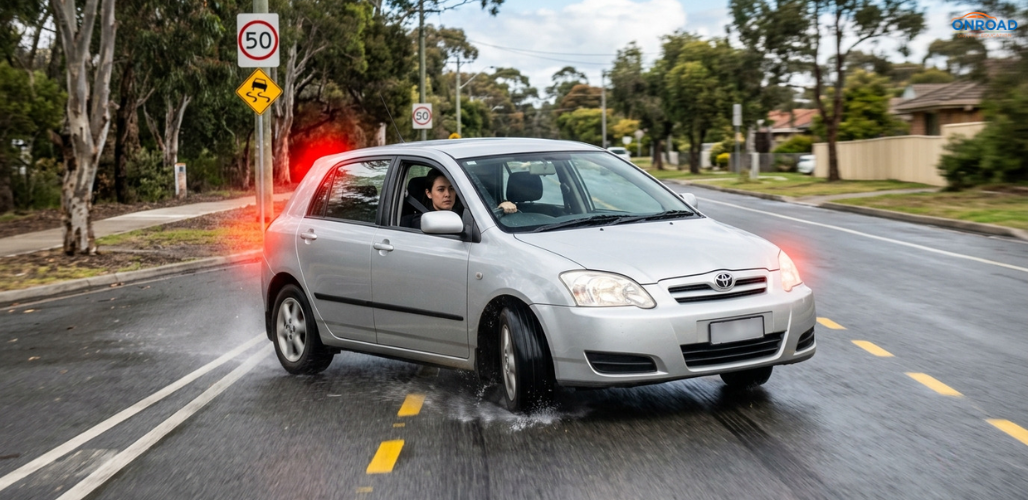
What This Article Covers
This article discusses when emergency braking may be needed, how to respond safely, how ABS works, and how better observation, following distance, and professional practice can improve your braking skills.
When You Suddenly Need to Stop
We often don’t give much thought to emergencies on the road, especially when we’re driving. Why think about situations that make you uncomfortable or unnecessarily aware of things you’d rather not imagine behind the wheel? But emergencies don’t wait until you feel ready to deal with them. Staying alert and knowing how to respond is one of the few things you can control.
When a car in front suddenly stops, a pedestrian unexpectedly enters the road, or something else requires you to brake quickly, your hazard perception and decision-making can make all the difference. That’s why emergency braking is something every driver should understand, and it’s a skill that can be developed with the right guidance from a Sydney driving school. It’s not simply about pressing the brake pedal as hard as possible. Knowing when to react, leaving enough space around your vehicle, and staying alert to what’s happening ahead can all help you respond more safely when the unexpected happens.
What Is Emergency Braking?
Emergency braking happens when you need to slow down or stop quickly because of an immediate hazard. Unlike normal braking, where you have time to plan your stop, emergency braking is a response to a situation that has developed suddenly. This could happen if a vehicle stops unexpectedly, someone moves into your path, or an obstacle appears on the road. The aim is to reduce your speed or stop safely while keeping control of the vehicle.
When Might You Need to Brake Suddenly?
Unexpected situations can happen even when you're driving carefully. A vehicle might pull out from a side street, traffic ahead could stop suddenly, or a pedestrian could step onto the road without warning. This is why looking well ahead matters. If you notice traffic slowing several cars in front, for example, you have more time to ease off the accelerator and prepare rather than waiting until you need to brake heavily.
What Should You Do During Emergency Braking?
If an immediate hazard means you need to stop quickly, react promptly and keep your attention on controlling the vehicle. Avoid making unnecessary steering movements while braking, particularly if you have limited space around you. If your car is fitted with ABS, the system is designed to prevent the wheels from locking during heavy braking and can cause the brake pedal to pulse or shudder when it activates. ABS is there to assist you, not replace your judgement or attention.
Look Ahead and Give Yourself More Time
Emergency braking isn't just about how quickly you can react. The earlier you recognise a developing hazard, the more time you have to respond. NSW Government recommends maintaining at least a three-second crash-avoidance space in good conditions, increasing it to four or more seconds in poor conditions such as wet weather or at night. Regular scanning also helps you spot hazards further ahead and to the sides of your vehicle. These habits can reduce the situations where you suddenly find yourself with nowhere to go and very little time to stop.
How Can You Improve Your Emergency Braking Skills?
The best way to improve is to work on the skills that help you recognise a hazard earlier and respond correctly. Practise scanning further ahead, maintaining a safe following distance and adjusting your speed when road or traffic conditions change. A professional driving lesson can also help you understand how your vehicle responds to braking and how to manage sudden hazards without deliberately creating dangerous situations on public roads. An instructor can observe your reactions and help you develop better braking, observation, and hazard-awareness habits.
How ABS Changes Emergency Braking
ABS can be particularly useful during heavy braking because it helps prevent the wheels from skidding. NSW Government explains that ABS controls braking force to prevent skidding, although it does not prevent you from losing control or crashing if you drive dangerously. If you're driving a car with ABS, knowing how the system feels when it activates can prevent you from being surprised by the pulsing sensation through the brake pedal. Your focus should still be on the hazard and maintaining control.
Emergency Braking Isn't a Substitute for Safe Driving
You shouldn't rely on emergency braking as your main way of dealing with hazards. Good observation, appropriate speed and enough space around your vehicle can give you more time to respond before a situation becomes critical. These are skills that should be developed throughout your learner driving experience. A good driving school can help you practise them in real traffic, while the Safer Drivers Course can help eligible young drivers develop safer decision-making and hazard awareness. Whether you're learning with a Sydney Driving School or looking for a Driving School Sydney, focus on building habits that help you recognise problems early rather than relying on last-second reactions.
Give Yourself More Time to React
You can’t predict everything another road user will do, but you can give yourself more time to respond when something unexpected happens. Keeping a safe following distance, scanning well ahead, adjusting your speed to the conditions and staying alert can all help you recognise a potential problem earlier. Emergency braking is an important skill, but good driving is also about reducing the chances of needing to brake suddenly in the first place. The more you practise looking ahead and making decisions early, the more prepared you’ll feel when situations change. If you want to build better braking and hazard-awareness skills, book a driving lesson with Onroad Driving School and get practical guidance from an experienced instructor who can help you become a safer, more confident driver.
Frequently Asked Questions
Q1. What is emergency braking?
A: Emergency braking is when you need to slow down or stop quickly because an immediate hazard has developed. It is different from normal braking, where you generally have more time to plan your stop.
Q2. When should you use emergency braking?
A: Emergency braking may be necessary when a vehicle stops suddenly, a pedestrian enters your path, or another unexpected hazard leaves you with little time to slow down normally.
Q3. How can I improve my emergency braking skills?
A: Work on looking further ahead, maintaining a safe following distance, and recognising hazards early. A professional driving lesson can also help you understand how your vehicle responds during heavy braking in an appropriate, controlled setting.
Q4. Does ABS help during emergency braking?
A: Yes. ABS is designed to prevent the wheels from locking during heavy braking. You may feel the brake pedal pulse or shudder when the system activates.
Q5. How does following distance help prevent emergency braking?
A: Leaving enough space gives you more time to recognise a hazard and respond. NSW Government recommends a three-second crash-avoidance space in good conditions and four or more seconds in poor conditions.