What This Article Covers
This article explains new road markings in Australia, why they’re designed to slow drivers down, how they improve pedestrian safety, and what Sydney drivers should do when encountering unfamiliar markings.
When the Road Suddenly Looks Different
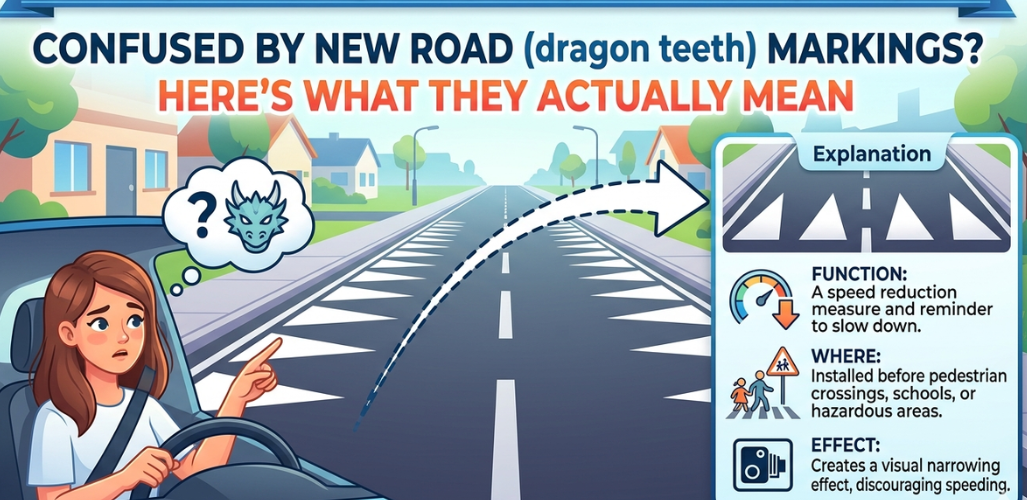
Ever notice how the width and space on the road affect your speed and driving? The concept is simple. Imagine walking through a wide hallway versus walking through a narrower corridor or space. In open, wider spaces, you can move freely and faster without any worries of collision. However, in narrower spaces, like a tightly packed road, you’ll naturally slow down and become more careful. The new road markings (yes, the dragon teeth ones) work the same way. They make the road feel narrower, making you want to slow down without even realising it. Many drivers across Australia have reported feeling confused when they first saw them. But these designs are not mistakes or random additions. They’re carefully planned safety features, added to ensure the drivers slow down when entering school zones or similar low-speed zones.
Most Sydney driving school ensure their students are aware of all types of road signs, including rarely used ones like these dragon teeth signs, and understand that reading the road is just as important as following signs. Let us learn more about these new markers gracing selected roads in NSW, Victoria, and SA, and how drivers should respond to them.
What Are These New Road Markings?
Commonly referred to as ‘dragon teeth’ markings, these new signs are one of the most talked-about additions to many rods in NSW, Victoria, and SA. These are 3D triangular shapes painted along the edges of the road, often pointing toward the lane. While they may initially come across as unusual or even decorative, their main purpose is highly practical. That’s why they’re usually found in:
They are designed specifically to grab your attention and warn you that conditions ahead are changing.
Why Are These Markings Being Introduced?
Wondering why these road signs were added? The main purpose of these signs is to reduce the driver’s speed in high-risk areas to protect pedestrians and improve road safety. And there’s a simple psychological principle behind it. These patterns create an optical illusion, making the road feel narrower and your speed feel higher than it actually is. As a result, you’ll slow down naturally without any additional enforcement.
TfNSW is using these signs more and more along with other safety measures across NSW, especially in areas with high pedestrian activity. However, drivers who can read the subtle cues on the road and adjust their driving accordingly can avoid hazards even without the help of these markings. Most Sydney driving schools and programs, like the Safer Drivers Course, focus on developing these skills in learners.
Why Are Drivers Confused by Them?
Despite their safety purpose, drivers are finding the dragon teeth markings more confusing than helpful. And the reason for this confusion comes down to its unfamiliarity. As these markings are rarely used, many of you aren’t taught about them or eventually forget them. So, when you encounter them on the road suddenly, you’re naturally going to question what they mean. You might mistake them for temporary markings, construction zones, or even decorative paint. Or you may hesitate because they’re unsure how to respond. However, your confusion doesn’t mean the markings aren’t working. It simply means you are still getting used to them.
What Should You Do When You See Unfamiliar Road Markings?
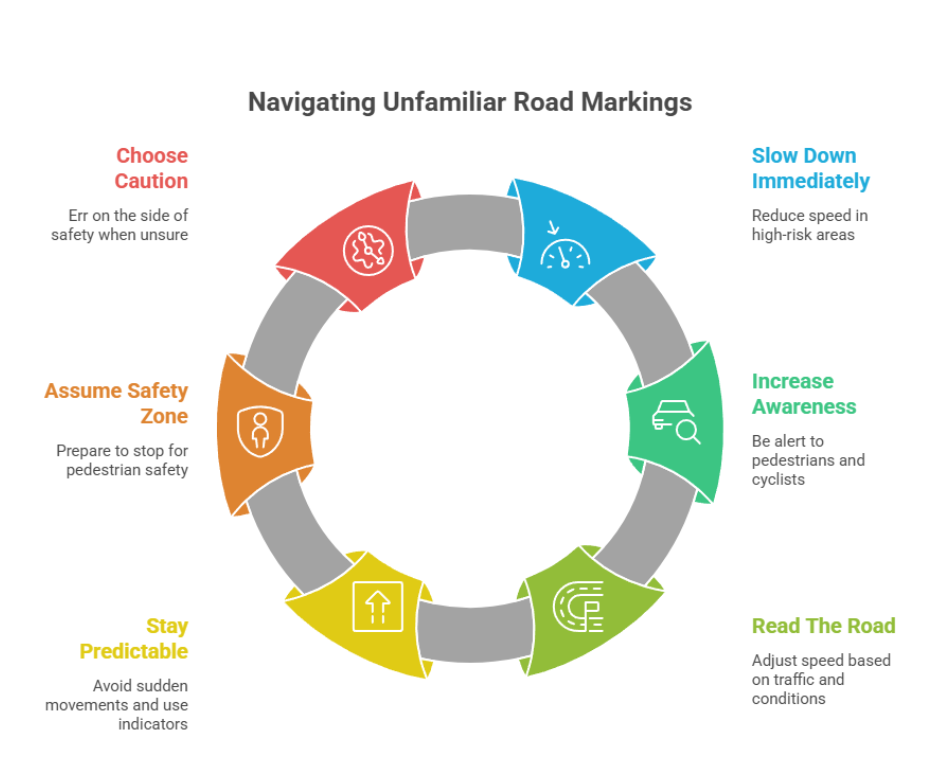
Now that you know what this marking is and why it is installed, you might be wondering what to do if you encounter it. Well, first you must remember to treat unfamiliar markings as a warning, not something to ignore. Instead, you should follow the tips below:
Slow Down Immediately
When these markings show up, it usually means you’ve entered a high-risk area, like a pedestrian zone or a school area. So, it’s better to slow down and take it easy.
Increase Your Awareness
But slowing down doesn’t mean relaxing. Instead, you should be more alert and aware of your surroundings. Look around you carefully for pedestrians and cyclists, and vehicles that may move unexpectedly.
Read The Road, Not Just The Signs
Most people forget that driving is not just about managing speed. You should learn to read the road, not just the road signs. In fact, a good driver knows to adjust the vehicle’s speed based on traffic and road conditions. It’s what any reputable driving school will teach you.
Stay Predictable And Controlled
When an unfamiliar road marking suddenly springs up on your road, it’s possible to get surprised and lose control. However, that surprise can quickly become dangerous. So, you should avoid sudden braking or swerving. Maintain your lane and use indicators clearly so other drivers can anticipate your actions.
Assume A Safety Zone Ahead
Most of these markings are placed where pedestrian activity is high. They help you slow down your speed and protect pedestrians from your sudden approach. So, when you see these markings on the road, be prepared to stop if needed.
When In Doubt, Choose Caution
Still confused about what to do when faced with these markers? Slow down or stop? Honk to alert any pedestrians around, or go on as before? Here’s one simple rule of thumb for driving: when in doubt, choose caution. It is always safer to slow down than to guess wrong.
The Road Is Changing, Stay Ahead
New road markings may look confusing at first, but they are designed with one goal in mind: safety. Remember, driving is not just about memorising rules. It is about understanding how to adapt to new and challenging situations. As driving environments evolve, so must driver awareness. The more you understand these changes, the more confident and prepared you’ll feel behind the wheel. Training with a Driving School Sydney provider or completing a Safer Drivers Course helps build this awareness. It teaches drivers how to read the road, anticipate hazards, and respond confidently even when something looks unfamiliar.
Want to improve your driving skills and become a safer, more confident driver? Join Onroad Driving School today and learn how to be a more alert, aware, perceptive, and confident driver.
Frequently Asked Questions
1. What are the triangle road markings on Australian roads?
A: They are safety markings, often called “dragon teeth,” designed to make drivers slow down by creating a visual illusion of narrower roads.
2. Are these markings used in NSW?
A: Yes, similar safety-focused markings are being introduced in parts of NSW, especially in pedestrian-heavy areas.
3. Do I need to slow down when I see these markings?
A: Yes. They are usually placed in high-risk areas, so reducing speed and increasing awareness is important.
4. Why do these markings look confusing?
A: They are new and not widely taught in older driving materials, so many drivers are still getting used to them.
5. Will these markings be included in driving lessons?
A: Yes. Modern driving lessons and programs like the Safer Drivers Course increasingly focus on real-world road awareness, including new safety features.