What’s in this Article
In this article, we will discuss what bus blind spots are, why they pose serious risks to drivers, cyclists, and pedestrians, and where these blind spots are located. We’ll also share practical safety tips for driving around buses and introduce the golden rule all drivers should follow to keep Sydney’s roads safer.
While buses and cars share the same road, they don’t share the same view. What’s clearly visible to a car driver may be completely invisible to a bus driver. And it’s this difference that most Sydney driving school instructors remind their students about sharing the road with buses. Buses may look slow and predictable, but their size creates large blind spots that can easily hide smaller vehicles, cyclists, and pedestrians. You’d think that, given the huge mirrors buses have, their drivers must have great visibility and see everything on the road from their vantage point. But the surprising truth is that even with multiple mirrors, bus drivers cannot see everything around them. Buses have blind spots big enough to hide a car, especially along the sides, directly behind, and near the front of the bus. This blog explores the key bus blind spots and the reasons they’re dangerous, how drivers can stay safe around buses, and the golden rule all drivers should follow.
Why Bus Blind Spots Are Dangerous
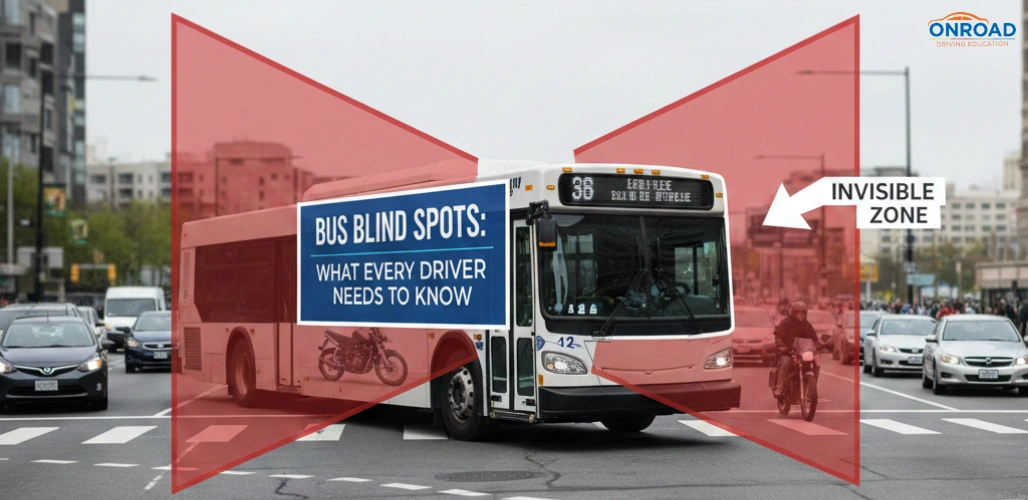
You may think bus drivers have a high seat, so they must also have good visibility. But that’s not the case with buses. Despite large mirrors and a high driving position, buses have areas where cars and other smaller vehicles simply disappear from view. It’s a lot like driving inside a room where several walls have no windows. You might feel confident moving forward, but you wouldn’t know what’s happening beside or behind you. That’s why bus blind spots are quite dangerous. Many Sydney driving schools and government programs, like the Safer Drivers Course, make it a point to teach learners about the blind spots of large vehicles and staying safe when driving with them. Because buses are long, wide, and tall, their blind spots are much larger than those of cars. If you’re driving alongside a bus, there’s a high chance the driver cannot see you at all, even if you can see the driver’s mirrors. The key bus blind spots that all drivers should know about are:
-
Front: Directly in front of the bus, where small children or objects can be hidden.
-
Along both sides: A large passenger area down the entire side of the bus, especially along the middle and the rear, where the driver's mirrors don't reach.
-
Rear: Directly behind the bus, including the area close to the bumper.
-
Beside the driver's door: The area right next to the driver's window.
How to Stay Safe Around Buses
Now that you know what bus blind spots are and how dangerous they can be, you must also learn how to stay safe when driving with buses. Buses are large, have multiple blind spots, and require more space to turn, change lanes, or perform other maneuvers. Knowing what to do when driving alongside a bus is essential. Here are some tips to help you maintain safety while driving beside buses:
-
Give way and allow extra space when driving near buses.
-
Avoid lingering alongside a bus, particularly near the middle and rear and especially when changing lanes.
-
Pass quickly and safely, only when it’s legal and clear.
-
Never assume the driver has seen you. Buses have huge blind spots, so it’s very likely that you’re invisible to the driver if you’re in one of these spots.
-
Give buses extra space near intersections, as these large vehicles often need to swing wide to make a turn.
-
Be patient near bus stops as buses can stop and start again quickly. Also, stay extra cautious near areas with high pedestrian and cyclist activity.
-
Stay alert around bus stops, school zones, and shopping strips, where people may step onto the road unexpectedly.
-
Don’t cut in sharply in front of a bus, as they need more time to stop, and it can lead to a collision.
-
Slow down when driving near a bus, rather than speeding. Rushing around a bus rarely saves time and often increases risk.
Because of their size, weight and limited visibility, buses need more space than cars. Driving safely alongside buses is not about being cautious. It’s about being smart, patient, and predictable.
The Golden Rule
Staying safe when driving with buses can be challenging, especially for learner drivers. Staying alert, cautious, patient, and predictable can help you maintain safety. This is why Sydney driving school place strong emphasis on teaching learners how to safely share the road with buses and other heavy vehicles. However, if you ever feel unsure or apprehensive when driving near a bus, there’s one golden rule worth remembering:
If you can’t clearly see the bus driver in their mirrors, they likely can’t see you either.
So, in such cases, it’s better to assume that they can’t see you. So, instead of invading their area, keep a safe distance and give them enough room to maneuver easily. Giving buses the space they need isn’t just courteous; it’s essential for preventing serious crashes and keeping everyone on the road safe.
This message is also highlighted during NSW Bus Safety Week, which in 2026 runs from Monday 23 February to Sunday 1 March. Dedicated to raising awareness among all road users about how to stay safe on and around buses, it serves as an important reminder of the need to maintain safety around buses. It reinforces that understanding bus blind spots and driving patiently around buses can prevent avoidable accidents.
Final Thoughts: Drive Smart, Stay Visible
Understanding bus blind spots helps you drive with more confidence and care on busy roads. With the right guidance from a trusted Sydney driving school, learners can build safe habits that last well beyond the test. Professional driving lessons at Onroad Driving School focus on real-world awareness, helping you share the road safely with buses and other large vehicles every day.
Frequently Asked Questions
Q1. What are bus blind spots?
A: Bus blind spots are areas around a bus that the driver cannot see, even when using mirrors. These include areas directly in front of the bus, along both sides, directly behind, and beside the driver’s door. These blind spots are large enough to hide cars, cyclists, and pedestrians.
Q2. Why are bus blind spots more dangerous than car blind spots?
A: Buses are much larger, longer, and heavier than cars, which creates significantly bigger blind spots. If a bus driver can’t see you, they can’t react to your presence, especially when turning, changing lanes, or pulling away from a stop.
Q3. How can I tell if a bus driver can see me?
A: A simple rule applies: if you cannot clearly see the bus driver in their mirrors, they likely cannot see you. In that situation, it’s safest to slow down, drop back, or move to a position where you’re clearly visible.
Q4. Is it safe to drive alongside a bus?
A: Lingering alongside a bus is risky, especially near the middle or rear. If you must pass, do so smoothly and legally, and don’t stay in the bus’s blind spot longer than necessary.
Q5. Why should drivers give buses extra space at intersections?
A: Buses often need to swing wide when turning and require more stopping distance. Cutting in front of a bus or following too closely can lead to serious collisions, particularly in busy Sydney intersections.
Q6. Why is awareness about bus blind spots important in NSW?
A: NSW roads include frequent bus routes, school zones, and busy shopping strips where buses stop often. Awareness campaigns like NSW Bus Safety Week reinforce the importance of patience, visibility, and understanding blind spots to prevent avoidable crashes.